
Ford Motor Co. nearly tripled its electric vehicle sales last month, according to a company report.
The auto giant increased its EV and hybrid sales this May by 184% compared to May 2020, marking a record number of 10,364 EVs sold in a given month, the sales report found.
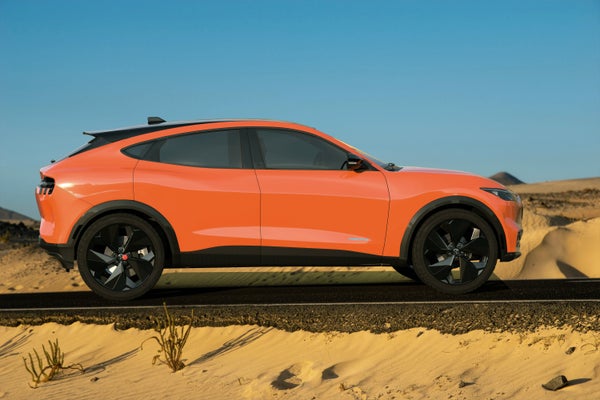
The significant increase is due in part to low sales last April and May during the height of the pandemic. Ford had also not started selling its electric Mustang Mach-E, which this year totaled 10,510 sales with 1,945 last month.
On supporting science journalism
If you're enjoying this article, consider supporting our award-winning journalism by subscribing. By purchasing a subscription you are helping to ensure the future of impactful stories about the discoveries and ideas shaping our world today.
Still, spokesperson Said Deep said the growth is notable.
“It’s significant because the increase in Mach-E sales continues to grow month to month,” he said. “It’s selling as soon as it hits the dealer, and we’re doing everything we can to keep up with the demand.”
Additionally, the auto manufacturer announced a “massive number” of reservations for its new, all-electric F-150 Lightning truck. Ford Vice President of Sales Andrew Frick said in a statement that reservations have topped 70,000 pickups.
The F-150 Lightning is the first electric truck Ford has manufactured in 20 years. The first was the Ranger EV, which the company once tried to reclaim and destroy (Climatewire, June 3).
Ford’s EV sales growth comes as policymakers and auto manufacturers try to pivot away from internal combustion engines in an effort to combat climate change. The transportation sector makes up the biggest source of greenhouse gas releases in the United States and a quarter of total emissions globally. Several European countries, along with California, are issuing plans to phase out all gas-powered vehicles. Meanwhile, President Biden has promised to spend billions of dollars on charging infrastructure, tax credits and rebates to fuel the transition.
To stave off catastrophic warming, electric vehicles must account for 60% of global sales by 2030, according to a recent International Energy Agency report. EVs currently account for 5% of global sales (Climatewire, May 18).
Ford said it expects 40% of its global sales to be battery-electric vehicles by 2030.
Reprinted from E&E News with permission from POLITICO, LLC. Copyright 2021. E&E News provides essential news for energy and environment professionals.