
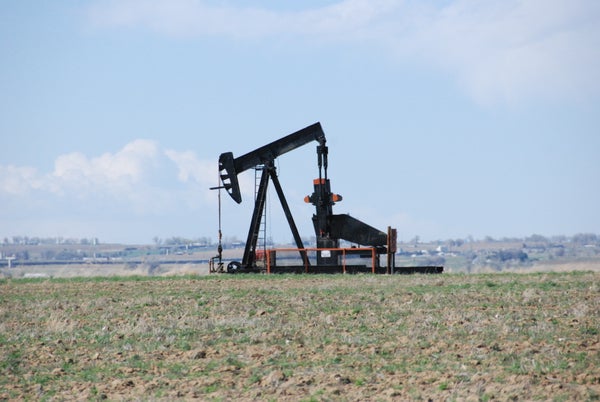
The Obama administration announced new rules on Thursday aimed at cutting methane emissions from new oil and gas wells and fracking operations.
The rules also will require energy companies to provide pollution information to the Environmental Protection Agency so it can regulate methane emissions from existing oil and gas wells.
Methane warms the climate 86 times as much as carbon dioxide over a period of 20 years before breaking down in the atmosphere. Methane leaking from oil and gas industry equipment significantly increases the carbon footprint of natural gas, which emits roughly half the carbon dioxide as coal when used to generate electricity.
On supporting science journalism
If you're enjoying this article, consider supporting our award-winning journalism by subscribing. By purchasing a subscription you are helping to ensure the future of impactful stories about the discoveries and ideas shaping our world today.
The new rules are part of the Obama administration’s goal to cut methane emissions from the oil and gas industry by up to 45 percent by 2025. They affect newly-drilled hydraulically fractured oil wells, which studies show are significant sources of leaking methane. At least one-third of human-caused methane emissions in the U.S. come from the oil and gas industry.
The regulations require companies to find and contain leaks with the goal of reducing methane pollution by the equivalent of 11 million metric tons of carbon dioxide by 2025, or roughly the same as the emissions from 2.34 million passenger cars.
The EPA is beginning work on regulating methane leaks from existing oil and gas wells by requiring energy companies to provide data to the agency under an “information collection request.” The request will require the companies to inform the EPA about their emissions and technology they could use to stop methane leaks.
“The first step is to gather information,” EPA administrator Gina McCarthy said. “We’re beefing up the requirements to use some new technology to make sure we’re keeping an eye on leaks.”
The EPA is expected to finalize the information request later this year and complete its gathering of data from the industry by early next year.
The American Petroleum Institute, an oil and gas industry trade group, criticized the administration’s actions. An API statement said that the rules threaten the future of the shale gas industry, which, prior to the downturn in oil and gas prices, boomed over the last decade with advancements in hydraulic fracturing technology.
Fracking allowed companies to flood the market with crude oil and natural gas that were previously unreachable.
“It doesn’t make sense that the administration would add unreasonable and overly burdensome regulations when the industry is already leading the way in reducing emissions,” API Vice President Kyle Isakower said. “Imposing a one-size-fits-all scheme on the industry could actually stifle innovation and discourage investments in new technologies that could serve to further reduce emissions.”
Groups urging the Obama administration to cut greenhouse gas emissions to tackle climate change said they strongly support the new methane regulations.
Sam Adams, director of the World Resources Institute’s U.S. Climate Initiative, said the rules encourage industry to install low-cost safeguards to keep methane leaks in check.
“Every ton of methane that escapes from our pipes and drilling wells plays an outsized role in warming our planet,” Adams said in a statement.
Carol Werner, executive director of the Environmental and Energy Study Institute, said in a statement that controlling methane leaks is important as more gas is used in electric power plants to replace coal—the globe’s largest single source of carbon emissions driving climate change.
“The next urgent step needs to be limiting methane emissions from existing sources in the fossil fuel industries,” Werner said. “The administration is working on such rules and we encourage their release as soon as possible.”
This article is reproduced with permission from Climate Central. The article was first published on May 12, 2016.