
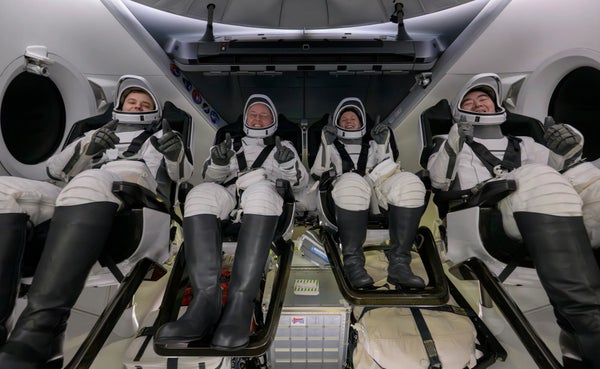
One of the most notable chapters in the history of NASA is coming to something like a close: after calling for an unprecedented medical evacuation of four astronauts onboard the International Space Station (ISS), these space farers are safely home. The episode has left myriad unanswered questions about what exactly happened to prompt the stunning decision to end their mission early—a first in the history of the ISS.
When asked at a Thursday press conference if NASA planned to release further information about the medical situation that prompted the evacuation, agency chief Jared Isaacman said it is “very committed to being transparent.”
“There are some medical privacy considerations here. That said, to the extent that we are in a position to share more information publicly and have the necessary consent, we would do so,” he said.
On supporting science journalism
If you're enjoying this article, consider supporting our award-winning journalism by subscribing. By purchasing a subscription you are helping to ensure the future of impactful stories about the discoveries and ideas shaping our world today.
“Obviously, we took this action because it was a serious medical condition,” Isaacman said. “The astronaut in question is fine right now, in good spirits and going through the proper medical checkouts.”
Crew-11 splashed down in a SpaceX Crew Dragon capsule off the coast of California at approximately 3:41 A.M. EST. The evacuating Crew-11 includes NASA astronauts Mike Fincke and Zena Cardman, Japanese Aerospace Exploration Agency astronaut Kimiya Yui and Russian cosmonaut Oleg Platonov. NASA has not identified which of these astronauts experienced the medical issue. “The crew member of concern is doing fine. We will share updates on their health as soon as it’s appropriate to do so,” Isaacman said on Thursday.
The crew is undergoing medical evaluation on a receiver ship and is headed to a hospital in San Diego, Calif., for further investigation and care, said Joel Montalbano, deputy associate administrator of NASA’s Space Operations Missions Directorate, at the same conference.
Whatever happened to Crew-11 could influence how the agency prepares for future human spaceflight missions, including the upcoming Artemis II moon flyby. NASA will conduct a full debrief and review of the Crew-11 mission, Isaacman said.
“When we go through the debrief on this, we’re going to learn a lot about the things we got right and did it very well and make sure we apply that in other applications going forward,” Isaacman said.
The ISS is equipped with an array of medical equipment, drugs and diagnostic tools—all of which the station’s crew know how to use. That means most minor ailments can be dealt with onboard: wounds can be sutured, blood can be taken and ultrasounds can be done. But NASA evidently decided that whatever occurred was serious enough that the ISS was not the place to keep the ailing astronaut. The agency plans for these contingencies on every mission, Isaacman said.
“There are early return options on Artemis II. There are options to bring astronauts back from the space station in hours, not days. So I think that the fact that we did take some extra time here does speak to the stability of the situation,” he said.