
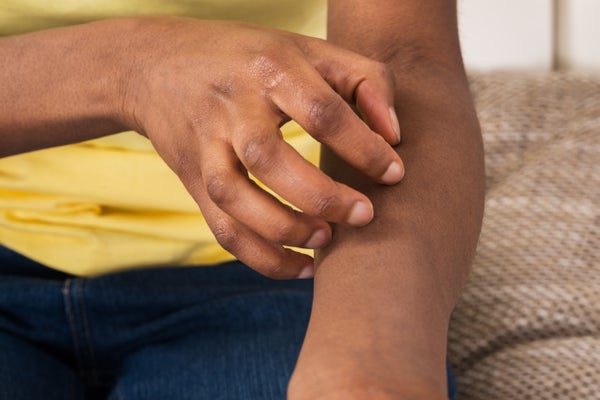
An itch, also known as pruritus, is a general sensation arising from the irritation of skin cells or nerve cells associated with the skin. While it can be a nuisance, pruritus serves as an important sensory and self-protective mechanism, as do other skin sensations such as touch, pain, vibration, cold and heat. It can alert us to harmful external agents, but can become unbearable if not treated.
Pruritus is a dominant symptom of many skin diseases and also occurs in some diseases that affect the entire body. An itching sensation of the skin arises due to stimulation of pruriceptors—itch-sensing nerve endings—by mechanical, thermal or chemical mediators. These include:
Chemicals for immune response (histamines) and pain relief (opiods)
Neuropeptides, which include pain-regulating messengers released within the brain, such as endorphins
The neurotransmitters acetylcholine and serotonin
Prostaglandins, which are lipids that, among other functions, create the sensation of pain in spinal nerve cells
On supporting science journalism
If you're enjoying this article, consider supporting our award-winning journalism by subscribing. By purchasing a subscription you are helping to ensure the future of impactful stories about the discoveries and ideas shaping our world today.
Stimulation by any of these agents is typically related to inflammation, dryness or other damage to the skin, mucous membranes or conjunctiva of the eye.
In general, pruritus involves activation of the pruriceptors of specialized nerve cells called C-fibers. These C-fibers are identical to those associated with the sensation of pain, but they are functionally distinct and only convey the itch sensation—they comprise about 5 percent of the total C-fibers in human skin. When stimulated superficially on the skin, these C-fibers carry signals along the nerve to the spinal cord and on to the brain, where they are processed, generating a scratching or rubbing reflex response. Scratching and rubbing then interfere with the sensations arising from pruriceptors by stimulating various pain and touch receptors in the same areas. Though it is helpful in relieving the itch, scratching offers only temporary relief and may cause the skin to become further irritated and possibly tear, which could result in an infection.
Despite approximately a century of pruritus research, there is no single effective antipruritic treatment, but several topical and orally-administered agents are available that suppress itching in certain clinical settings. These agents include lotions and creams (such as calamine and hydrocortisone), antihistamines, opioid antagonists, aspirin and ultraviolet light therapy.