
In the space of four months Colorado goes from one extreme to another.
If you’ve been following the news, you may have heard that over a period of about six days earlier this month, Colorado was visited by torrential rains. How torrential? Well, take Boulder, Colorado, for instance: as of last week, it had received more than 17 inches of rainfall in September [pdf] — that’s the most ever recorded for that city in a single month since record-keeping began in the 1890s. (See here, here, and here.)
And with torrential rains usually comes floods, and this was no exception. Water overflowed the banks of myriad rivers and streams, including the Poudre and Big Thompson Rivers, before flowing into the South Platte River. The resulting flooding covered as much as 4,500 square miles of land, displacing some 12,000 people, destroying or damaging about 19,000 residences, and tragically killing at least seven people with several others missing some of whom are presumed dead. The National Weather Service has classified it as a once-in-a-thousand-year flood — when we talk about extreme weather events, this one most definitely fits the bill. (See slideshow here; flood maps here, here and here.)

On supporting science journalism
If you're enjoying this article, consider supporting our award-winning journalism by subscribing. By purchasing a subscription you are helping to ensure the future of impactful stories about the discoveries and ideas shaping our world today.
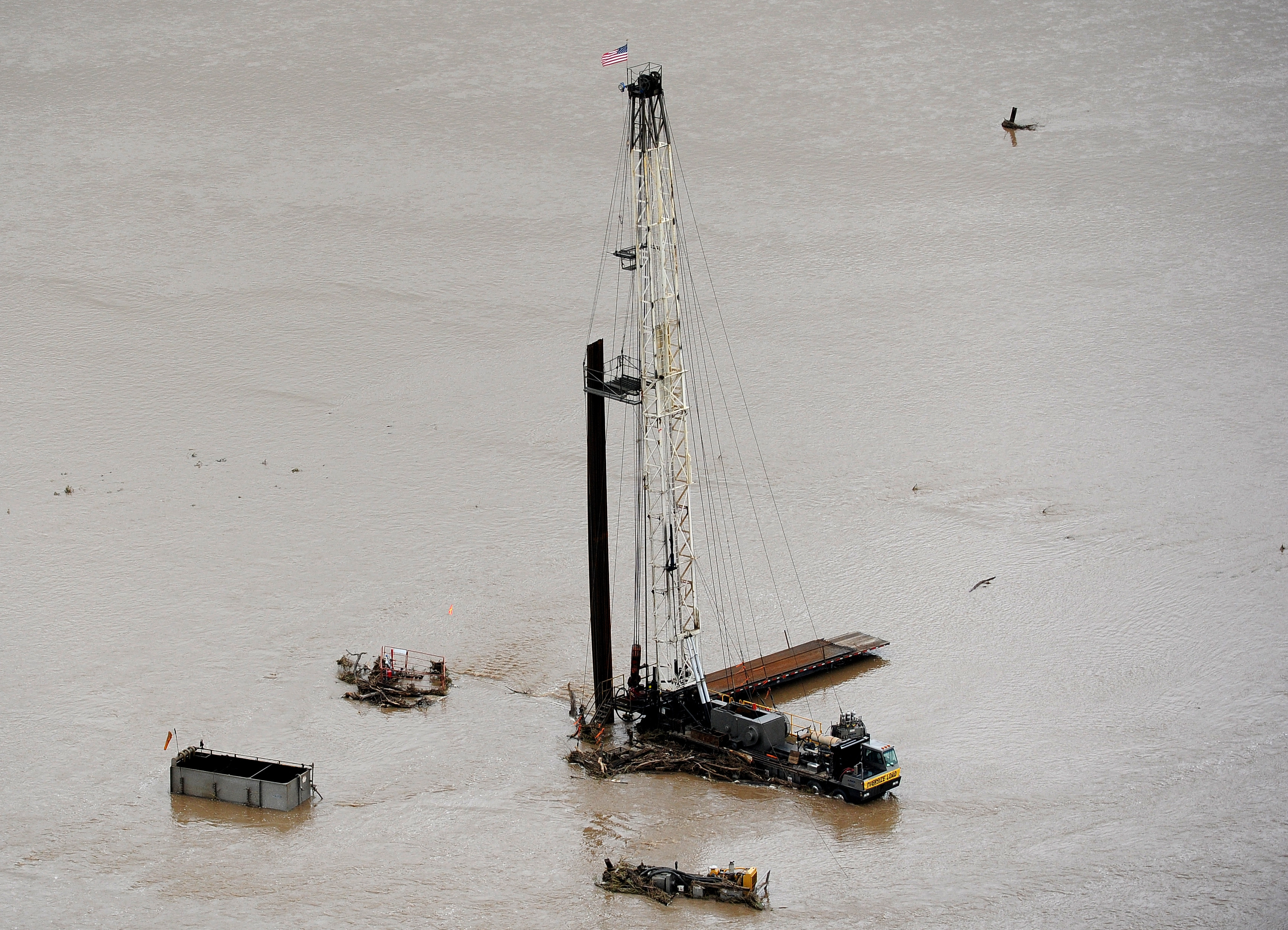
And now that the people of Colorado have a respite from the rain and can start thinking about drying out, it is also time to assess the damage. And sadly the folks are finding out that washed-away homes and roads and bridges (see photos) are not the only things they have to contend with. As is virtually always the case, floods bring water pollution and the threat of disease from flooded water treatment plants and runoff from animal farming operations. This flood has an added twist. The state is heavy into oil and gas extraction and the flooding is overrunning wells and upending storage tanks, almost certainly sending toxic contaminates into the state’s surface water. As many as 1,000 wells have reportedly been flooded. (See also here.)
It will probably take weeks before the full extent of the contamination is known. In the interim, oil and gas companies have taken precautionary steps by shutting down some 1,900 facilities. Federal and state authorities are reportedly tracking eight spills, including two significant ones into the South Platte River and the St. Vrain River. (See images of impacted oil and gas sites here and here and video here.)
The really surreal aspect of this is that a mere four months ago I was in this part of Colorado, standing on the banks of the Poudre River when I took this picture. Back then the issue on everyone’s mind was drought and wildfires. We spent a good deal of time talking to people who had fought 2012′s High Park Fire, which at the time was the most destructive fire in Colorado history, and visited with folks who had lost their homes to that blaze. Everyone was wondering what the 2013 fire season would bring — more fires or a respite from them? We got our answer during our stay when four new wildfires broke out, including the Black Forest fire, which surpassed the High Park fire as Colorado’s most destructive. (See here and here.)

As the team I traveled with and I said goodbye to Colorado in June, we wished them some rain to keep the fires away. They got some rain all right. Compare to this recent picture of Poudre Canyon with the one I took in June.
Sadly for Colorado, 2013 will go down as the year with the most destructive wildfire and flooding in terms of cost in the state’s history. And the ongoing story is not just a Colorado story. The surging waters of the South Platte River that caused devastating floods in Colorado have now reached Nebraska and have begun to cause havoc there. If that’s just the “new normal,” we’ve got some serious problems.