
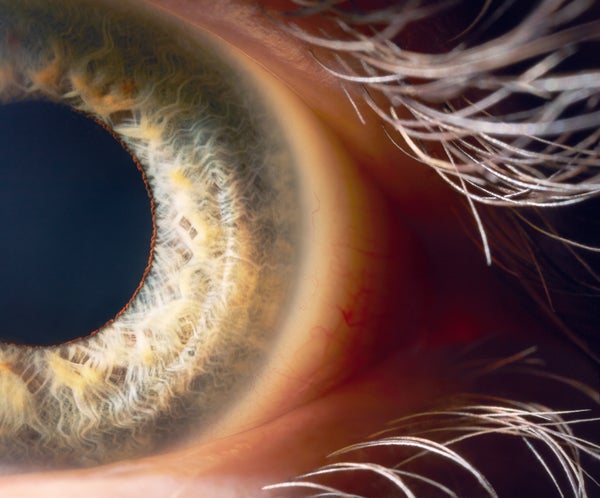
A first-of-its-kind gene therapy received approval from the Food and Drug Administration on Tuesday to treat a rare, inherited form of childhood blindness.
The FDA marketing clearance of Spark Therapeutics’s Luxturna is historic for scientific and financial reasons. Luxturna is the first gene therapy approved in the U.S. that targets a disease caused by mutations in a specific gene.
A Spark spokesman said the company will not disclose the Luxturna price tag until early January. Wall Street analysts expect the gene therapy to command a $1 million price tag—another first, but not necessarily a welcome one. At a time when drug prices are coming under intense scrutiny, Spark will need to convince insurers, politicians, and pharma critics that the benefit to patients offered by Luxturna justifies its high cost.
On supporting science journalism
If you're enjoying this article, consider supporting our award-winning journalism by subscribing. By purchasing a subscription you are helping to ensure the future of impactful stories about the discoveries and ideas shaping our world today.
The Institute for Clinical and Econonic Review (ICER), an influential non-profit that studies the cost effectiveness of new drugs, is holding a meeting to review Luxturna on Jan. 25.
“Today’s approval marks another first in the field of gene therapy—both in how the therapy works and in expanding the use of gene therapy beyond the treatment of cancer to the treatment of vision loss—and this milestone reinforces the potential of this breakthrough approach in treating a wide-range of challenging diseases,” FDA Commissioner Scott Gottlieb said in a statement.
Like other gene therapies, Luxturna inserts a functional piece of DNA into cells in order to replace or override a defective, disease-causing gene. For Spark, the injection site is the eyes of people, mostly children and young adults, who have a type of inherited retinal disease caused by a mutation in a gene called RPE65. People born with mutated RPE65 genes suffer from severe vision problems, including night blindness. As the disease progresses, people lose all functional vision and can eventually become totally blind.
Luxturna is not technically a cure. The surgical injection—one in each eye—aims to halt disease progression and restore some functional vision.
Wall Street analysts, on average, are forecasting 2018 Luxturna sales of $78 million, growing to $238 million in 2019 and peaking at $445 million, according to Bloomberg. These estimates carry a higher-than-normal degree of uncertainty, however, due to the uncertainties about Luxturna’s price and reimbursement.
Spark shares were up 4 percent to $50.82 following the FDA’s announcement.
Republished with permission from STAT. This article originally appeared on December 19, 2017