FDA Approves First Sickle Cell Drug in 20 Years

Approximately 100,000 people in the U.S. have the disorder

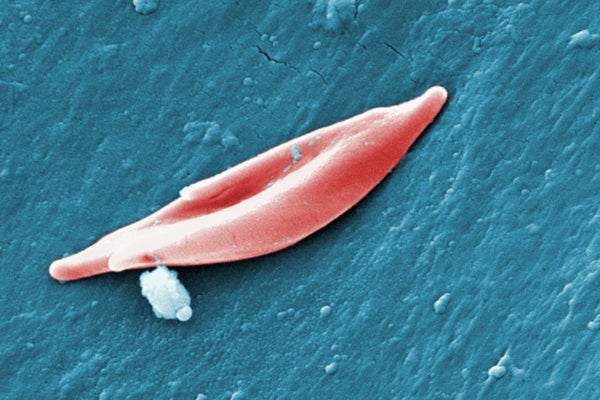
A scanning electron micrograph (SEM) of a sickle cell red blood cell found in a blood specimen of an 18 year old female patient.

Join Our Community of Science Lovers!

The FDA approved a new medicine Friday to reduce the complications associated with sickle cell disease, a rare blood disorder.

The drug, Endari, is made by privately held Emmaus Medical and is the first new treatment for sickle cell disease to secure FDA approval in almost 20 years. However, the active ingredient in Endari—L-glutamine—is an old chemical that can be purchased over the counter, which could complicate Emmaus’s ability to obtain insurance coverage.

In Emmaus’s pivotal clinical trial, treatment with Endari over 48 weeks reduced the frequency and length of hospital visits for sickle cell pain crises compared to placebo. Commonly reported side effects of the drug included constipation, nausea, and headache.


On supporting science journalism

If you're enjoying this article, consider supporting our award-winning journalism by subscribing. By purchasing a subscription you are helping to ensure the future of impactful stories about the discoveries and ideas shaping our world today.


Sickle cell disease is a rare, inherited disorder characterized by abnormally sickle-shaped red blood cells. These malformed red blood cells clog blood vessels and cut off oxygen to the body’s tissues, leading to episodes of severe pain and organ damage.

Approximately 100,000 people in the U.S. have sickle cell disease, according to the National Institutes of Health.

While Endari focuses on reducing the complications of sickle cell disease, Bluebird Bio is developing a gene therapy to treat the disease’s underlying cause and potentially cure patients. Research using the CRISPR gene-editing technology aims to accomplish the same goal.

Other companies working on new, novel drugs targeting sickle cell include Global Blood Therapeutics and Novartis.

Republished with permission from STAT. This article originally appeared on July 7, 2017

STAT delivers fast, deep, and tough-minded journalism. We take you inside science labs and hospitals, biotech boardrooms, and political backrooms. We dissect crucial discoveries. We examine controversies and puncture hype. We hold individuals and institutions accountable. We introduce you to the power brokers and personalities who are driving a revolution in human health. These are the stories that matter to us all.

More by STAT

It’s Time to Stand Up for Science

If you enjoyed this article, I’d like to ask for your support. Scientific American has served as an advocate for science and industry for 180 years, and right now may be the most critical moment in that two-century history.

I’ve been a Scientific American subscriber since I was 12 years old, and it helped shape the way I look at the world. SciAm always educates and delights me, and inspires a sense of awe for our vast, beautiful universe. I hope it does that for you, too.

If you subscribe to Scientific American, you help ensure that our coverage is centered on meaningful research and discovery; that we have the resources to report on the decisions that threaten labs across the U.S.; and that we support both budding and working scientists at a time when the value of science itself too often goes unrecognized.

In return, you get essential news, captivating podcasts, brilliant infographics, can't-miss newsletters, must-watch videos, challenging games, and the science world's best writing and reporting. You can even gift someone a subscription.

There has never been a more important time for us to stand up and show why science matters. I hope you’ll support us in that mission.

Thank you,

David M. Ewalt, Editor in Chief, Scientific American

Subscribe