
In the summer of C.E. 80, Roman emperor Titus opened the Flavian Amphitheater—colloquially called the Colosseum—with a series of games. According to writings from the time, in one game, women dressed as the goddess Diana and used spears to fight vicious boars across the arena floor. The question of whether these venatrices, or female beast hunters, truly existed had long been a mystery. In a new study, researchers report the first physical evidence confirming they were real.
Female convicts were known to be tossed to the leopards or other animals, and there has been some written evidence, as well as depictions in ceramics, of trained female gladiators fighting other people. But there are only a handful of written accounts mentioning venatrices. Nero apparently had women riding chariots equipped with bows and arrows in C.E. 59, while later emperors supposedly had them fighting leopards, bears and other beasts either topless or dressed as famed goddesses. But it has been unclear whether these women were treated as novelties or actually skilled warriors, as well as how important or prevalent they were.
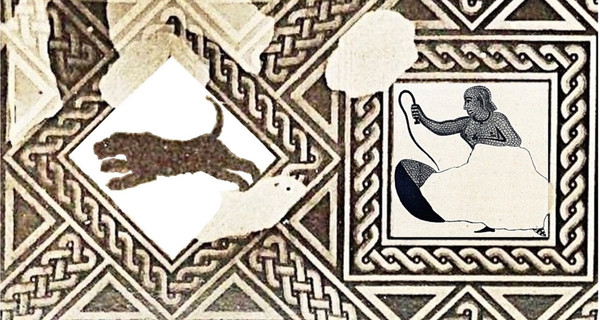
The new research focuses on a large third-century mosaic from Reims, France, which was rediscovered in 1860 by French researcher Jean Charles Loriquet but mostly destroyed in 1917 by World War I bombing campaigns. Archaeologists and historians have only been able to examine a single surviving panel and Loriquet’s drawings. A subsequently obliterated panel that Loriquet had depicted featured a topless figure holding a whip in one hand and what was likely a dagger or cloth in the other.
On supporting science journalism
If you're enjoying this article, consider supporting our award-winning journalism by subscribing. By purchasing a subscription you are helping to ensure the future of impactful stories about the discoveries and ideas shaping our world today.
Loriquet’s descriptions used gender-neutral language to describe the figure and neglected to mention it was topless, which is a key feature that distinguishes it from the two flatter-chested, whip-carrying, bearded figures in the mosaic.
But when Alfonso Manas, a sports historian at the University of California, Berkeley, and author of the new study, saw the drawings of the figure, “I immediately realized she was a woman,” he says.

A drawing of the mosaic from Reims, found in 1860 and destroyed in 1917 during WWI.
Alfonso Manas, The International Journal for the History of Sport, CC by 4.0
Manas argues the figure matches written accounts of female beast hunters and carries the correct weapon set, suggesting she was a whip-wielding venatrix pressing a leopard toward her armed male beast-hunter colleague—a venator—as part of a leopard-hunting game. She is the only topless figure in the mosaic, which was a deliberate choice by the artist, Manas says, to clearly illustrate her sex. “This is the first known visual depiction of a woman fighting beasts in the Roman arena,” he says.
“It is excellent detective work,” says Michael Carter, a historian at Brock University in Ontario, who was not involved with the research. “We have here a female who appeared in the arena—not as a victim,” condemned to damnatio ad bestias, but as a trained fighter who was honored. “The fact that a rich man ordered one of those women to appear in the mosaic shows the great admiration spectators felt towards those women,” Manas says.
The find also suggests female beast hunters persisted for several decades longer than female gladiators who fought other people, Manas says. “Spectators wanted to continue seeing them performing in the arena.”