
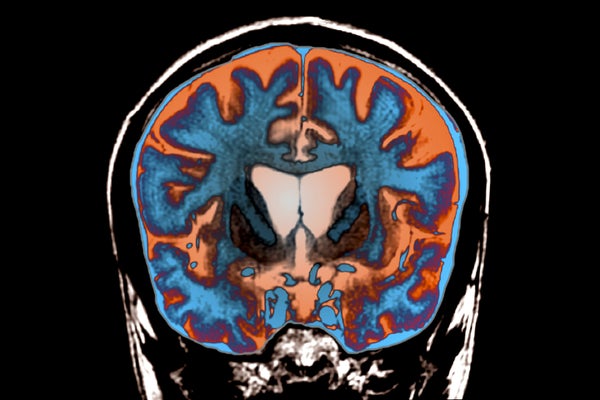
Every week neurologist Victor Sung sees people with Huntington’s disease, a rare and deadly neurodegenerative disorder, at his clinic at the University of Alabama at Birmingham. But a Wednesday in September 2025 was a day unlike any other. “I cried with every single patient,” Sung says. The results of crucial phase 1/2 clinical trials had finally been released: an experimental gene therapy drug was the first treatment that appeared to slow the progression of Huntington’s.
The treatment, known as AMT-130, is delivered deep into the brain during a surgery that lasts more than eight hours. The trials were small, with the three-year follow-up results including just 24 participants who received either a high or a low dose of treatment.
These results showed that a high dose reduced the rate of disease progression by 75 percent compared with rates in an external control group, according to the new therapy’s developer, uniQure, which posted the results ahead of their review by the Food and Drug Administration. The company hopes to receive accelerated approval from the FDA, which, according to a uniQure spokesperson, could allow the drug to be approved by the end of 2026 without the need for phase 3 trials.
On supporting science journalism
If you're enjoying this article, consider supporting our award-winning journalism by subscribing. By purchasing a subscription you are helping to ensure the future of impactful stories about the discoveries and ideas shaping our world today.
Sung’s patients probably won’t receive the drug anytime soon. But this early success has given the Huntington’s community measured hope after years of disappointments. “We’ve had so many failures,” Sung says, “and there’s been a lot of heartbreak over many years in this community.”
Other researchers also praised the development. “This news has really buoyed everyone’s expectations of what might be possible,” says Rachel Harding, a toxicologist at the University of Toronto. Harding, who wasn’t involved in the trials, researches the underlying cause of Huntington’s.
When someone is diagnosed with Huntington’s, their treatment options are limited. Doctors can offer patients medications that address their symptoms, such as by reducing depression and involuntary, unpredictable muscle movements called chorea. But until now, nothing could slow or halt the progression of the disease itself. People usually exhibit their first symptoms between the ages of 30 and 50 and can expect to live another 10 to 30 years after that. Because the gene that causes Huntington’s runs in families, people affected by the disease have often watched many loved ones struggle and die from it, too.
In some ways, Huntington’s seems like it should be the easiest neurodegenerative condition to treat. Unlike the case with Parkinson’s and Alzheimer’s, scientists know exactly what causes the illness: a mutation of the HTT gene in which a short, three-letter DNA sequence is repeated many times, causing the gene to produce a faulty version of the huntingtin protein. These faulty proteins damage neurons in a deep brain structure called the striatum and cause uncontrollable muscle movements, cognitive decline, and other symptoms that worsen over time.
Researchers have traditionally focused on treatments that can lower the levels of abnormal huntingtin protein in the brain. For years the most promising treatments were antisense oligonucleotides (ASOs), which are delivered by recurring injections into a patient’s spinal canal. These drugs contain small pieces of genetic material that bind to and “silence” the messenger RNA molecules carrying instructions to build the mutant huntingtin protein.
But in 2021 clinical trials of three ASOs were halted, two in phase 1/2 trials. One phase 3 trial of a drug produced by Roche called tominersen was stopped because participants in the trial’s treatment group showed no improvement in their condition compared with those who received a placebo. In some cases, it appeared to exacerbate symptoms—an outcome a neurologist called “the saddest possible result.”
Although this setback was devastating at the time, Sung sees it as an inevitable part of the scientific process. Developers of new therapies targeting genes often try to tackle Huntington’s first because of its straightforward genetic cause—meaning it’s the site of both failure and innovation. “Sometimes the first generation of the thing doesn’t work out, and we move to the next,” he says.
Unlike ASOs, AMT-130 is a one-time treatment, but it involves a lengthy and invasive brain surgery. Physicians insert catheters into deep parts of the brain where they can deliver the drug directly into the neurons most severely affected by the abnormal huntingtin protein. The medication is transported through “shuttles” called adeno-associated viruses—noninfectious viral shells that can carry genetic material. Once inside neurons, the payload continuously produces tiny pieces of genetic material called microRNA. These microRNA target and degrade messenger RNA carrying the instructions to build more huntingtin protein.
Patients in the clinical trial were given either a high or a low dose of the drug. Three of the participants who received high doses of AMT-130 experienced serious neurological side effects, such as swelling and severe headache. The trial was paused as a result, but it resumed after the participants recovered and the data were reviewed. From then until the end time point for the data released so far, no serious adverse events were reported. Most minor adverse events were related to the initial surgery, uniQure said, and those all eventually resolved.
It is not clear at this stage how much the treatment will cost if it is approved or how it would be paid for, but experts say it will almost certainly be very expensive. This, in addition to its invasive nature, means it likely won’t be available to most people around the world who have Huntington’s or carry the faulty HTT gene. “What it does is give us hope that perhaps huntingtin-lowering is a really viable therapeutic strategy,” Harding says.
Other huntingtin-lowering therapies are currently in clinical trials—two given in pill form and two delivered via spinal tap, including Roche’s tominersen for a more restricted group of people. Along with the AMT-130 results, this competitive field brings Harding hope. “I don’t think it’s that the others haven’t succeeded,” she says. “They just might not have succeeded yet.”