
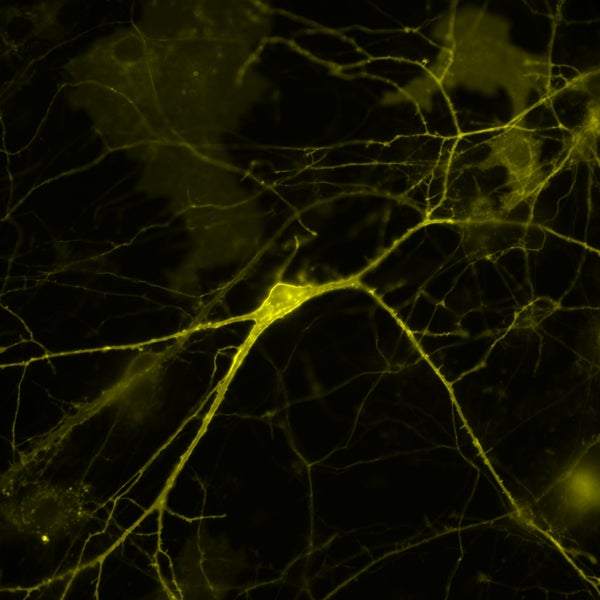
You probably know the GIF as the perfect vehicle for sharing memes and reactions. We believe the format can go further, that it has real power to capture science and explain research in short, digestible loops.
So each Friday, we’ll round up the week’s most GIF-able science. Enjoy and loop on.
The Best Brain Ever
On supporting science journalism
If you're enjoying this article, consider supporting our award-winning journalism by subscribing. By purchasing a subscription you are helping to ensure the future of impactful stories about the discoveries and ideas shaping our world today.

Slice by slice, these images of a human brain are perhaps the clearest ever produced. To get their resolution down to a tenth of a millimeter, researchers at Massachusetts General Hospital used a magnetic resonance imaging (MRI) machine with a superstrong seven-tesla magnet (typical MRI magnets are only 0.5 to three teslas). They scanned the brain for 100 hours—from top to bottom, side to side and front to back. It helped that their subject, a brain donated to science by a 58-year-old woman who died of viral pneumonia, could stay perfectly still.
Although this GIF gives a beautiful representation, it doesn’t do justice to the original images. Check them out here.
Daredevil Droplets
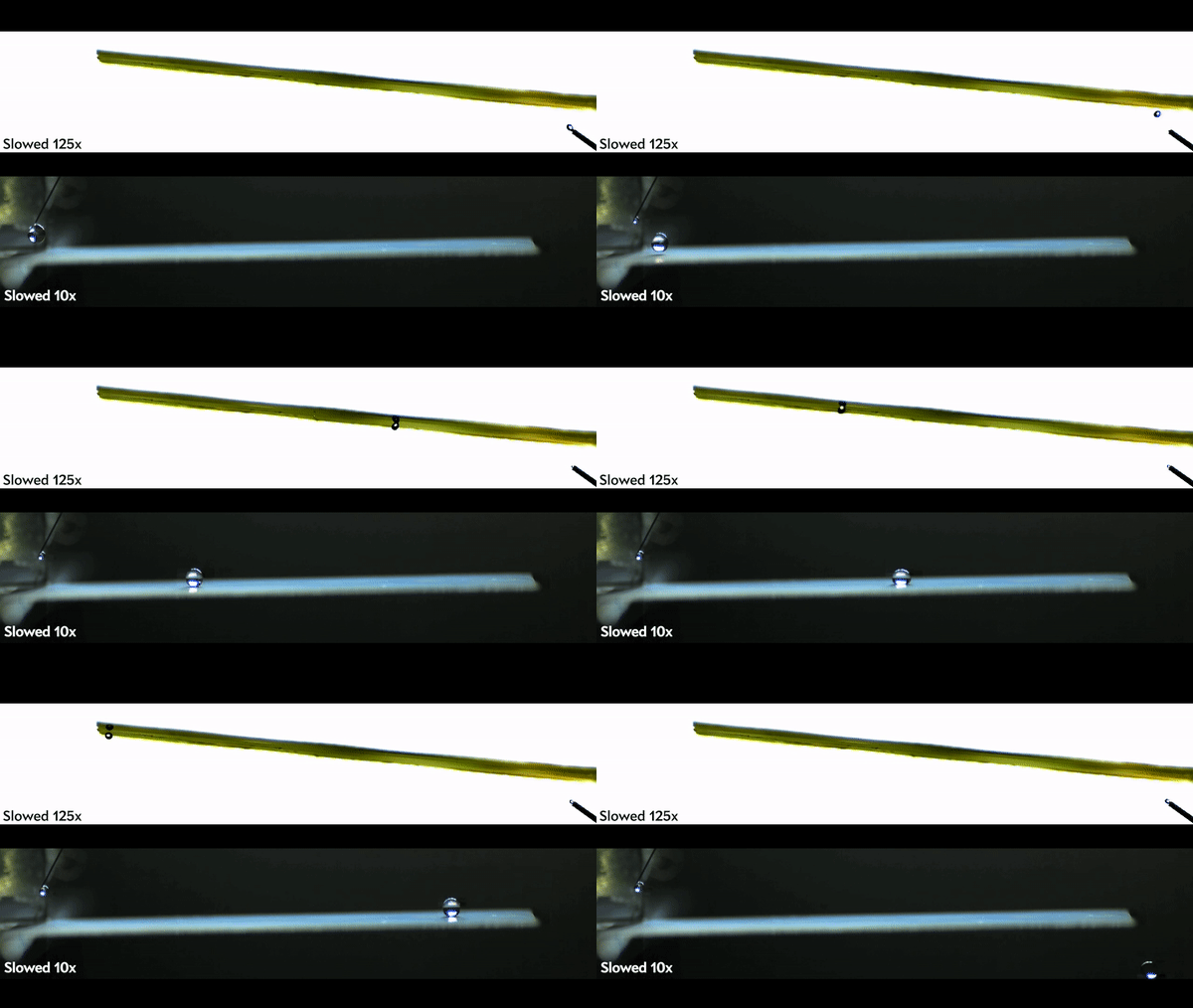
Credit: City University of Hong Kong
Freely rolling uphill and upside down, these water droplets seem to break basic rules of nature. Thankfully, the laws of physics remain intact: the droplets are stuck to an invisible path of charged atoms. This new technique, developed by an international team of researchers, can transport tiny drops of liquid faster and farther than other methods.
The scientists began with a surface that strongly repelled both water and oil. By having water droplets fall on the material from different heights, they made it weakly charged on one end and strongly charged on the other, with a steady gradient in between. A charged droplet of water placed on the surface was then able to follow this gradient, even if that surface was inclined, upside down or vertical. The method could be useful in microfluidics applications, such as lab-on-a-chip models and bioanalytic machines.
Mesmerizing Mollusks
.gif)
Credit: Nidhi Vijayan
These adorable little blobs are Hawaiian bobtail squid, just 12 hours old. Born in a lab at the University of Connecticut, the tiny cephalopods help scientists learn about symbiotic relationships in nature. Bobtail squid have a special connection to light-producing bacteria called Vibrio fischeri. They give the microbes a home in their light organ and are repaid for the favor with a sly camouflage technique. When the squid hunt at night, the bacteria light up to disguise them from predators below, who see the glowing blob as another star in the sky. Researchers at the university say they want to better understand this interaction and other squid-bacteria relationships.
Voltron: Not Just a Super Robot Anymore
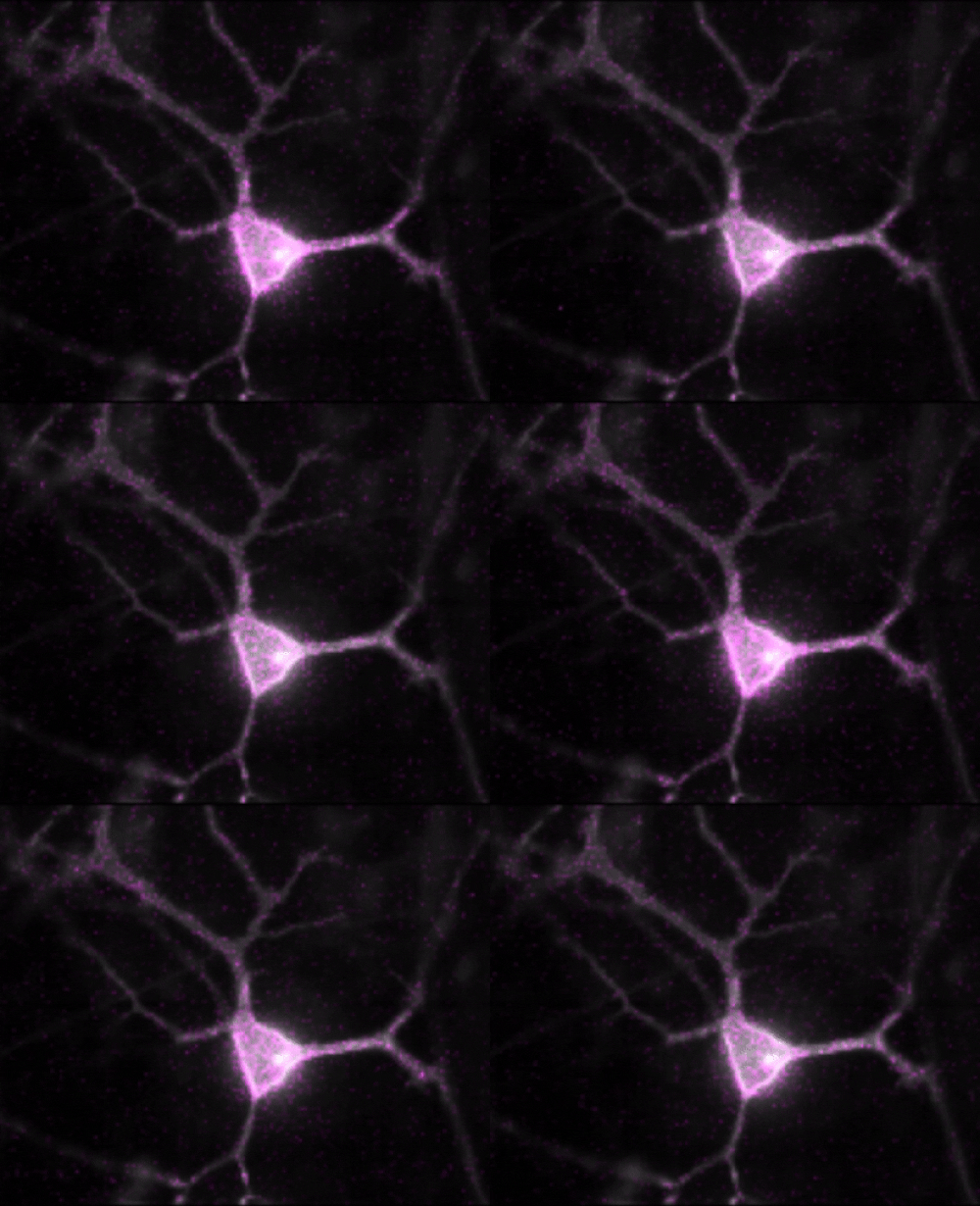
Credit: Ahmed Abdelfattah
Each time this mouse neuron flashes purple, it sends a message. These electrical signals typically happen without such lavender bursts, but this nerve cell holds a special dye that emits light with each impulse. The flashes allow researchers to track the neuron’s activity in real time.
Dubbed Voltron, after a giant cartoon robot from the 1980s, the technique, created by researchers at the Howard Hughes Medical Institute, allows scientists to track the activity of neurons in living animals with more precision and for longer time periods than ever before. It involves modifying a protein in the cell so that it can grab a particular synthetic dye, making the neuron light up each time it sends a signal.
Invisible Moonlight
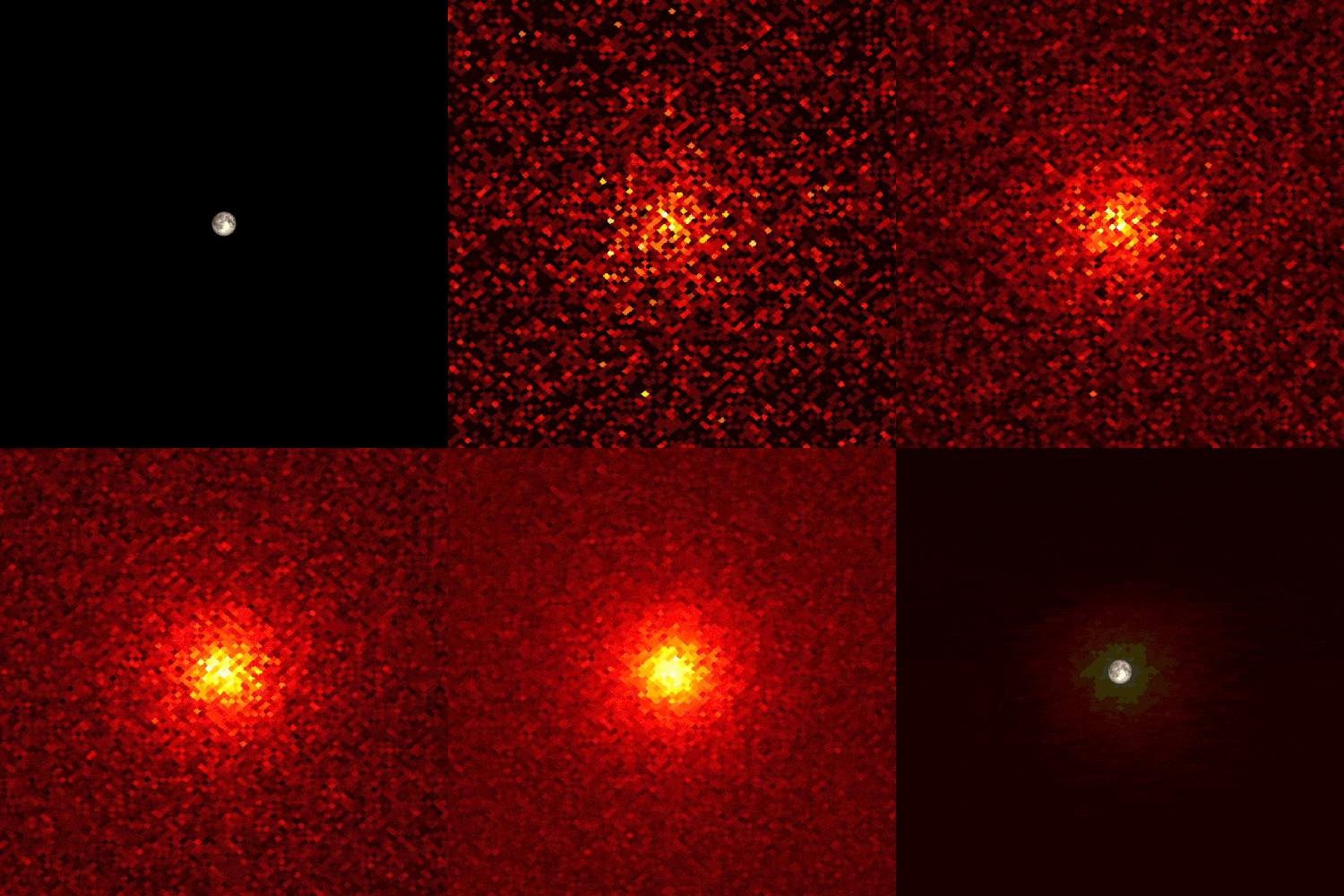
Each month, we watch the moon go through phases, shifting from bright to dark.* This is a matter of perspective, however. If we saw just gamma rays—the highest-energy form of light—released by the moon, it would lose its monthly cycle. Instead it would take on a constant blurry glow like the GIF above, which shows the moon’s gamma rays, as seen by NASA’s Fermi Gamma-ray Space Telescope. The clearest image in the sequence combines 10.7 years of collected data.
Why do we care about this blurry view of the moon in the first place? As NASA and others prepare to send humans back to the moon or even to Mars, it’s important to understand exactly what astronauts face in the harsh environment of space. The moon shines with gamma rays because it lacks a magnetic field like the one we have here on Earth. Without the magnetic protection, particles from space called cosmic rays relentlessly bombard the moon’s surface and produce gamma radiation, some of which escapes.
Want more science GIFs? Here you go.
*Editor’s Note (8/23/19): This sentence was edited after posting to correct the description of the moon’s phases.