
Spinal implants have suffered similar problems as those in the brain—they tend to abrade tissue, causing inflammation and ultimately rejection by the body. Now an interdisciplinary research collaboration based in Switzerland has made a stretchable implant that appears to solve this problem. Like Lieber's new brain implant, it matches the physical qualities of the tissue where it is embedded.
The “e-dura” implant is made from a silicone rubber that has the same elasticity as dura mater, the protective skin that surrounds the spinal cord and brain, explains Stéphanie Lacour, a professor at the school of engineering at the Swiss Federal Institute of Technology in Lausanne. This feature allows the implant to mimic the movement of the surrounding tissues.
Embedded in the e-dura are electrodes for stimulation and microchannels for drug therapy. Ultrathin gold wires are made with microscopic cracks that allow them to stretch. Also, the electrodes are coated with a special platinum-silicone mixture that is stretchable.
On supporting science journalism
If you're enjoying this article, consider supporting our award-winning journalism by subscribing. By purchasing a subscription you are helping to ensure the future of impactful stories about the discoveries and ideas shaping our world today.
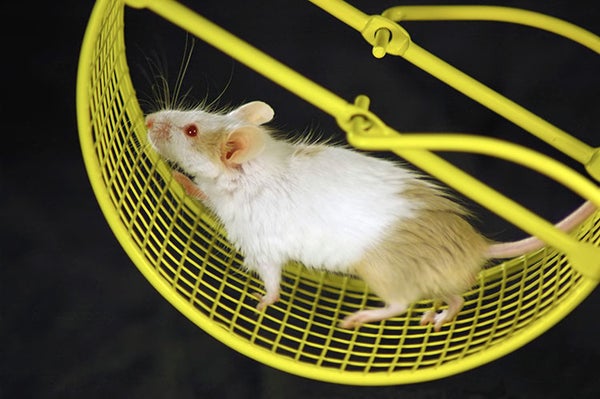
In an experiment that lasted two months, the scientists found that healthy rats with an e-dura spinal implant could walk across a ladder as well as a control group with no implant. Yet rats with a traditional plastic implant (which is flexible but not stretchable) started stumbling and missing rungs a few weeks after surgery. The researchers removed the implants and found that rats with a traditional implant had flattened, damaged spinal cords—but the e-dura implants had left spinal cords intact. Cellular testing also showed a strong immune response to the traditional implant, which was minimal in rats with the e-dura implant.
Finally, the researchers implanted the device directly on the spinal cord of paralyzed rats. With a combination of drug therapy and electrical stimulation administered via the e-dura, the rats were able to walk again. Researchers envision the e-dura being used in people with spinal cord injuries, as a brain implant and even to correct nerve damage in other parts of the body.