
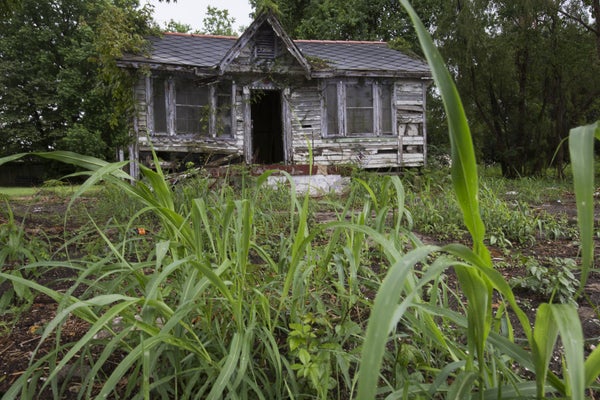
The risk of coastal floods damaging or destroying low-income homes will triple over the next 30 years as rising tides and storm surges encroach on low-lying developed areas, according to new findings from the nonprofits Climate Central and National Housing Trust.
By 2050, researchers say, more than 25,000 affordable housing units are expected to see coastal flooding at least once in a typical year — up from 7,700 just 20 years ago, with the largest number of at-risk housing units in three states: New Jersey, New York and Massachusetts.
Among the study's more striking findings are that nearly half of New Jersey's "large stock of exposed affordable housing units could flood at least four times per year" by 2050. Four New Jersey cities — Atlantic City, Camden, Penns Grove and Salem — are of particular concern, researchers found, as they are among the poorest in the country, with an average median household income of under $29,000 per year.
On supporting science journalism
If you're enjoying this article, consider supporting our award-winning journalism by subscribing. By purchasing a subscription you are helping to ensure the future of impactful stories about the discoveries and ideas shaping our world today.
Pacific and Gulf Coast regions — including low-lying parts of Louisiana, Texas, California and Washington — will also see elevated risk of coastal flooding among affordable housing units, the study found.
"These impacts may increase maintenance costs, threaten public health, and cause profound disruptions to families already struggling to make ends meet," researchers Maya Buchanan and Ben Strauss of Climate Central wrote. The problem is compounded by the fact that affordable housing is "frequently in poor repair to begin with, [and] additional damage from flooding may be particularly challenging — and expensive — to remedy."
The study, published in Environmental Research Letters, is described as the first nationwide assessment of coastal flood risks facing affordable housing, and it adds to a growing body of research showing the disproportionate impacts climate change is having on low-income, disadvantaged and minority communities across the country.
"To me the core point here is not the sheer numbers" of homes facing elevated risk, Strauss said in an interview. "It's the vulnerability of the people who are threatened. They don't have any easy recourse or remedy to deal with this problem."
Experts say the challenges of reducing climate risk for middle- and low-income residents are complex. In older cities, like New York and Boston, affordable housing can be concentrated in urban waterfront areas where residents are attached socially and economically to their homes and neighborhoods. They have little means or incentive to move. In other places, affordable housing — both privately and publicly owned — were purposefully constructed in floodplains because property was cheap and considered unsuitable for other types of development.
Rob Moore, a senior policy analyst at the Natural Resources Defense Council, said such factors leave low-income families — many of whom are renters — trapped in properties with rising disaster risk, plummeting real estate values, deteriorating environmental conditions and little or no investment by property owners who see no long-term future for their properties.
Yet government housing security programs tend to overlook renters, Moore added, "adding to this problem of climate displacement for people who can ill afford to be out of their homes." The most effective solutions are focused on adaptation and resilience, either by helping people move out of harm's way or providing public investment in elevating or flood-proofing homes.
"It's the communities that recognize these problems now and are being proactive about it that are going to be the most successful," Moore said. "A lack of affordable housing doesn't fix itself. The same is true of sea-level rise. If you wait for the problem to come in your front door, then you've waited too long."
According to the Climate Central study, the cities with the largest number of affordable housing units at risk of flooding induced by rising sea levels are New York City (4,774 units), Atlantic City (3,167 units) and Boston (3,042 units). By percentage increase, the highest-risk cities are Norfolk, Va., and Charleston, S.C., each of which is expected to see a more than fivefold jump in at-risk affordable housing units by 2050.
Reprinted from Climatewire with permission from E&E News. E&E provides daily coverage of essential energy and environmental news at www.eenews.net.