
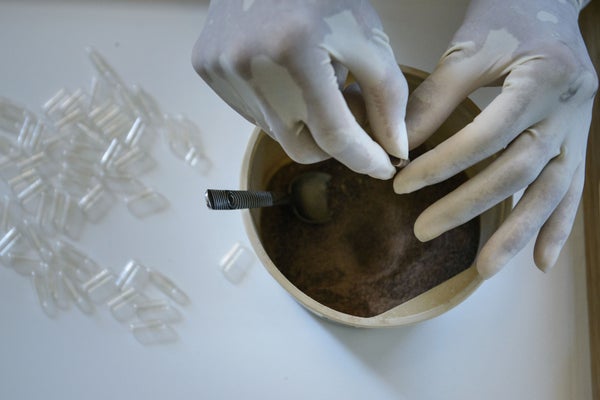
In a certain corner of the alternative health movement, fueled by celebrity buzz, it’s become en vogue for new mothers to consume their placentas after giving birth. Companies have sprouted up offering to turn placentas into smoothies, truffles, and freeze-dried pills, claiming that placental eating—practiced by many mammal species—can give recovering moms a boost of vitamins and nutrients, and help prevent postpartum depression.
Evidence, however, is lacking that it has any health benefit for human moms or babies. And a new case report reveals that it can be incredibly dangerous.
The case report describes an infant born in Oregon in fall 2016 who was soon after diagnosed with a strep infection that was causing breathing difficulties. After a course of antibiotics, the baby was immediately hospitalized again, and tested positive for strep a second time. Doctors, searching for the source of the infection, eventually realized that the mother was taking daily dried placenta capsules. Testing of the capsules confirmed that they were strep positive.
On supporting science journalism
If you're enjoying this article, consider supporting our award-winning journalism by subscribing. By purchasing a subscription you are helping to ensure the future of impactful stories about the discoveries and ideas shaping our world today.
The report, published in the CDC’s Morbidity and Mortality Weekly Report, states that the pills likely increased the strep bacteria in the mom’s intestines and skin, from which the baby picked up the bacteria.
And a similar risk may exist for other bacteria, the scientists point out. Placental tissue, consumed raw, may contain various kinds of bacteria. But even prepared placenta—whether by cooking, drying, or preservation—can transmit infection. The report states that the unnamed company that made the placenta pills dehydrated the tissue at 115°F–160°F, while a temperature of at least 130 for 121 minutes is needed to kill off Salmonella bacteria. (The report doesn’t list the temperature needed to kill strep bacteria.)
Celeb health hazards
A number of companies, including Puget Sound Placenta, Northern Virginia Placenta Specialist Collective, and Austin Womb Service offer placental encapsulation like that described in the report, selling everything from basic capsules to chocolate placenta truffles to placenta smoothies. January Jones, Alicia Silverstone, and Kim Kardashian are just of a few of the celebrities who consumed pills made of their own dried placenta after giving birth, claiming the practice provides a myriad of health benefits.
According to Timothy Caulfield, a health law professor at the University of Alberta who authored the book “Is Gwyneth Paltrow Wrong About Everything,” placental consumption is one of many health phenomena lacking scientific evidence that has been popularized by celebrities.
“I really think that, but for people like Kim Kardashian and other celebrities, people wouldn’t be doing this, they wouldn’t be considering it, it wouldn’t be so popular,” he said. “The power of celebrity culture is profound, and I really think this is an example of it.”
For example, in her 2014 book “The Kind Mama,” Alicia Silverstone wrote about eating placenta pills, “I got to the point that my husband said, ‘Did you have your happy pills today?’ And I was really sad when they were gone. It really helped me.”
And, Caulfield points out, social media allows celebrities to channel health advice to their fans in a way that feels more conversational and tangible. Kim Kardashian, for example, has posted repeatedly about placenta pills on Twitter and Instagram, including a photo of a glass canning jar full of pills labeled “Kim, Your Amazing Placenta.”
When it comes to health, Caulfield recommends mostly ignoring celebrities and pop culture.
“What you really want to wait for is a body of evidence,” he said. “Look for trusted sources of information that aggregate the science. That’s what you want. You don’t want sources that hype a single study, you don’t want to take advice from a celebrity, you don’t want to use anecdotes and narratives as evidence.”
Republished with permission from STAT. This article originally appeared on June 29, 2017