
World governments at a United Nations biodiversity meeting this week rejected calls for a global moratorium on gene drives, a technology that can rapidly spread modified genes through populations and could be used to engineer entire species. But environmental activists’ appeals for a freeze on gene-drive field trials, and on some lab research, are likely to resurface in the future.
“I’m very relieved,” says Andrea Crisanti, a molecular parasitologist at Imperial College London, who is part of an effort that seeks to use gene drives to control malaria. He and others worry that a moratorium would make research on the technology more difficult, scare away funders and prevent field tests. “It would have been a disaster for developing the technology,” he says. But the calls for a ban, discussed at the meeting of the UN Convention on Biodiversity (CBD) in Cancún, Mexico, on 4–17 December, are not going to go away, he says. “Those who are opposed to this technology will be more organized next time.”
The idea of a moratorium found support among some countries. But a final agreement released on December 16 merely urged caution in field-testing the products of synthetic biology, including gene drives, while supporting better risk-assessment of the products’ potential effects.
On supporting science journalism
If you're enjoying this article, consider supporting our award-winning journalism by subscribing. By purchasing a subscription you are helping to ensure the future of impactful stories about the discoveries and ideas shaping our world today.
“It’s a way of governments saying ‘we need to know more about these technologies before making these decisions. At the same time, we are worried they may have impacts on biological diversity,’” says Calestous Juma, a former executive secretary of the CBD and an expert on science and technology policy at Harvard University in Cambridge, Massachusetts.
Rapid spread
When the CBD last met in South Korea in 2014, gene drives were a largely theoretical idea. They are genetic elements that can quickly spread through sexually reproducing populations. Usually, a parent has a 50% chance of passing on to their offspring one of the two versions, or alleles, of each gene that they carry. This limits the pace at which a genetic modification can spread through a population. But gene-drive technology tilts the odds, so that a specific change to one allele is inherited by a higher proportion of progeny. In theory, an entire population could quickly carry the same modification.
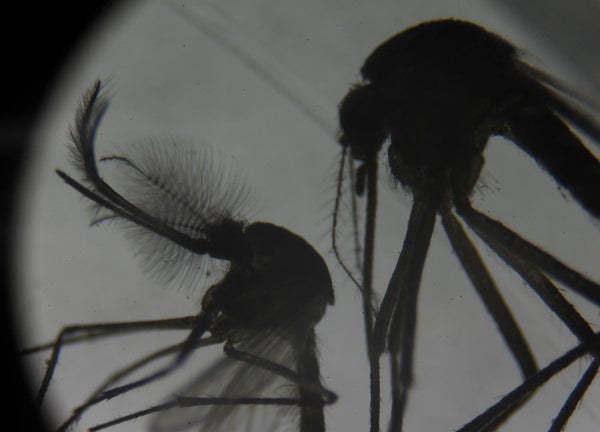
In the past two years, researchers have lab-tested gene drives in yeast1, fruit flies2 and mosquitoes3, 4 that are based on a gene-editing technology called CRISPR–Cas9. Crisanti’s team, for instance, is working on gene drives in the malaria-carrying mosquito Anopheles gambiae that perpetuate mutations causing females to become infertile. Spread of this mutation could mean that mosquito populations plummet to levels that do not support the transmission of malaria. The researchers' project, called Target Malaria, has attracted tens of millions of dollars in funding, and the scientists hope to conduct field trials in Africa as early as 2024. Other groups are developing gene drives to quell island rodents and other pests.
Individual countries can regulate gene-drive research and field trials. But there is no international framework that specifically governs the technology's use, even though its effects can spread across borders — a problem noted in a 2016 assessment of the technology by the US National Academies of Sciences, Engineering, and Medicine. That report highlighted the UN Convention on Biodiversity as a potential tool with which to regulate gene drives, including how, when and even whether they are deployed. Signed by nearly 200 countries — with the notable exception of the United States — the convention's treaty was drafted to meet a series of biodiversity goals, but also includes provisions on the movement of genetically modified organisms across borders.
“It’s a perfect place to start putting together the governance of gene drives,” says Jim Thomas, a research programme manager at the ETC Group, an environmental organization in Ottawa, Canada, that supports a moratorium
Environmental concerns
Many saw this year’s CBD meeting in Cancún as an opportunity for bringing their concerns to the negotiating table. Environmental activists who proposed a moratorium on both lab research and field trials say the consequences of an accidental release are too severe for the work to proceed without having safeguards and international rules in place.
“Right now, given the state of the labs, we shouldn’t do it,” says Jaydee Hanson, a policy director at the International Center for Technology Assessment in Washington DC who helped to organize a coalition of environmental activist groups pushing for a freeze on the technology. “We need to pause in order to thoroughly and thoughtfully figure out what we need to have in place for the responsible use of this technology,” adds Dana Perls, a senior food and technology campaigner at Friends of the Earth, which is part of the coalition.
But political scientist Kenneth Oye at the Massachusetts Institute of Technology in Cambridge says a moratorium would have hurt efforts to reign in gene drives as well as to understand their risks. “That’s the research that is needed to inform judgement on whether and how to proceed,” he says. For instance, if gene drives could be limited to a specific area — an idea being tested in nematode worms reared in a lab — their risk of spreading out of control would be cut. Oye hopes that such data will be available by the time the CBD next convenes in 2018.
Evolutionary engineer Kevin Esvelt at the Massachusetts Institute of Technology, who works on gene drives, opposed the moratorium. But he wanted the convention to call for greater transparency in how the technology is studied in labs and deployed in the field, for instance by creating a mandatory gene-drive registry. “I suppose you can say it’s a victory for the status quo,” he says. “They didn’t do anything ruinous to either side. They didn’t do anything productive either.”
This article is reproduced with permission and was first published on December 21, 2016.

_at_Camp_Lemonnier,_Djibouti,_June_7,_2013_130607-F-VA021-041.jpg)