
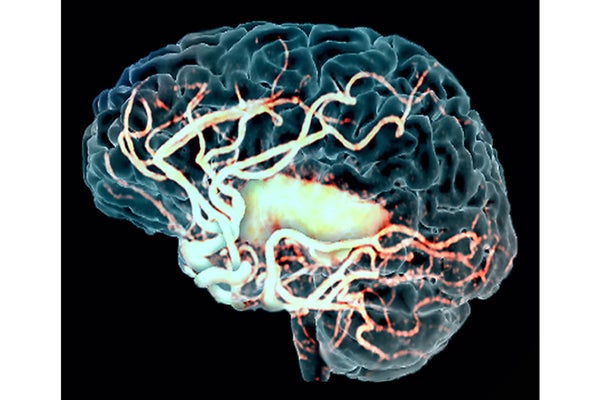
A widely criticized experiment last year saw a researcher in China delete a gene in twin girls at the embryonic stage in an attempt to protect them from HIV. A new study suggests that using a drug to delete the same gene in people with stroke or traumatic brain injuries could help improve their recovery.
The new work shows the benefits of turning off the gene in stroke-induced mice by using the drug, already approved as an HIV treatment. It also focuses on a sample of people who were naturally born without the gene.People without the gene recover faster and more completely from stroke than the general population does, the researchers found.
The combined results suggest the drug might boost recovery in humans after a stroke or traumatic brain injury, says S. Thomas Carmichael, the study’s senior researcher and a neurologist at the University of California, Los Angeles, David Geffen School of Medicine. His team has started a follow-up human study to test the drug’s efficacy.
On supporting science journalism
If you're enjoying this article, consider supporting our award-winning journalism by subscribing. By purchasing a subscription you are helping to ensure the future of impactful stories about the discoveries and ideas shaping our world today.
The combination of mouse research and leveraging of people’s genetic data to confirm the relevance of drug targets makes the new research a “landmark paper,” says Jin-Moo Lee, co-director of the Barnes–Jewish Hospital and Washington University Stroke and Cerebrovascular Center in Saint Louis who was not involved with the work.
In late 2018 He Jiankui, then at the Southern University of Science and Technology in China, said he had edited the CCR5 genes of twin girls at the embryonic stage in an effort to protect them against HIV infection. The first-of-its kind outcome was apparently healthy twin girls born without CCR5, He said.
Carmichael and others have spent years looking for genes and other biological pathways that could lead to medications to help the brain repair itself after a stroke or brain injury. CCR5 is the first such candidate to show real promise, some experts say. For stroke and traumatic brain injury patients, “I do believe this is the beginning of hope,” says Alcino Silva, a neuroscientist at U.C.L.A. who worked with Carmichael on the new study. The results were published this week in Cell.
The drug used to block the activity of CCR5 has been on the market since 2007 and is approved as a treatment to slow the progression of HIV and AIDS. Carmichael gave the drug, called maraviroc, to stroke-induced mice. Knocking down the gene’s activity in the brain’s motor neurons “had a tremendous effect on recovery,” he says. The drug does not easily cross the blood–brain barrier but enough made it through to preserve brain connections involved in chemical signaling and increase connectivity between brain regions, the study showed.
For the study’s human-validation component, the team examined 68 individuals without CCR5 genes, along with 446 controls. Those who suffered strokes—and also had the natural gene deletion—recovered movement abilities faster and had fewer cognitive deficits months after the stroke than did patients who had intact CCR5. The exact mechanism behind the result is unknown. In healthy people the CCR5 gene is thought to promote learning and memory by acting as a “stop” signal, telling neurons to receive only one memory and hold it, rather than continuing to receive and retain every signal that comes in, Carmichael says. Immediately after a stroke or brain injury the gene helps to tamp down the excitability of neurons, helping to limit damage, he says. But if the gene keeps pumping out “stop” signals, it also interferes with the brain’s ability to build new connections and repair damage, he adds.
Carmichael’s approach is to turn off these signals by starting people on the drug about five to seven days after a stroke and continuing for about three months, allowing the brain a better chance to recover. In the current clinical trial participants also undergo intensive physical therapy to restore movement. This two-pronged approach to treatment is important, says Steven Cramer, a stroke recovery expert at the University of California, Irvine, who did not take part in the research. Drug therapy can open the door to reshaping brain circuits, but recovery also requires individual effort—just like learning the task in the first place—he notes. “Just because you sprinkle magic pixie dust on the brain, doesn’t mean you fix the problem,” he says. “You have to pair it with experiential training.”
Cramer says he thinks treatment with anti-CCR5 drugs could become “one of the major pillars” of therapeutic advances in stroke recovery.