
CLIMATEWIRE | If glaciers have memories, climate change is erasing them.
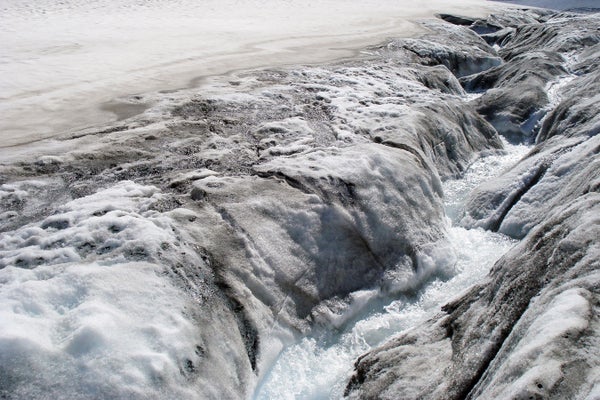
Rising temperatures are melting an area of the Swiss Alps where scientists have been working to collect centuries-old ice cores that contain evidence of past environmental conditions. Now, researchers say they're out of time. Ice in that area of southern Switzerland has been compromised as water rushes from the top of melting glaciers into their interiors, washing away valuable climate data.
The discovery, published Friday in the journal Nature Geosciences, centers on the Corbassière glacier nestled in a valley that's 13,000 feet high in the Grand Combin mountain group. The study is part of the Ice Memory Foundation project, which is racing to preserve ice cores from glaciers around the world before they disappear.
On supporting science journalism
If you're enjoying this article, consider supporting our award-winning journalism by subscribing. By purchasing a subscription you are helping to ensure the future of impactful stories about the discoveries and ideas shaping our world today.
Scientists use high-altitude mountain glaciers for a variety of research. The ice — which has often been frozen in place for hundreds or thousands of years — contains trapped particles and other chemical signatures that scientists can analyze for information about what the environment was like when the water froze.
But these samples are only reliable if the ice remains relatively undisturbed and uncontaminated. If temperatures rise quickly enough, meltwater at the surface of the glacier can trickle down into deeper layers of ice, washing away some of those chemical signatures.
That’s what happened at Corbassière. A team of researchers from Italy and Switzerland compared two ice samples drilled from deep inside the glacier at different times — one retrieved in 2018 and the other in 2020. The 2018 sample contained the usual patterns in chemical fingerprints. But some of the expected chemical signatures were missing in the later sample.
Air temperatures at Corbassière have risen rapidly in the last couple of decades — and particularly since 2015. The researchers suggest that a gradual increase in meltwater on top of the glacier has sent larger and larger volumes of water trickling down through the ice.
Reprinted from E&E News with permission from POLITICO, LLC. Copyright 2023. E&E News provides essential news for energy and environment professionals.