
Global warming has been affecting the severity of droughts worldwide since at least the beginning of the 20th century, new research has found.
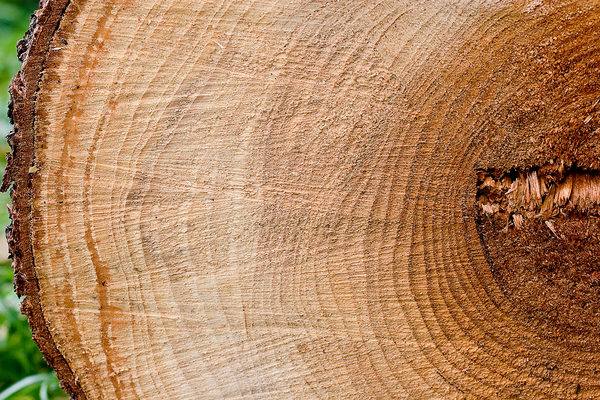
The findings emerged from centuries of tree ring data from around the world, analyzed by researchers from NASA, the Lawrence Livermore National Laboratory and Columbia University. Tree rings can provide a remarkable record of the changing climate conditions a forest has lived through, as trees tend to grow differently when subjected to hotter or drier periods.
The new study confirms what models have already suggested: Rising temperatures have been influencing global droughts for more than a century.
On supporting science journalism
If you're enjoying this article, consider supporting our award-winning journalism by subscribing. By purchasing a subscription you are helping to ensure the future of impactful stories about the discoveries and ideas shaping our world today.
“I was surprised, but perhaps I shouldn’t have been,” said NASA climate scientist Kate Marvel, who led the research.
The influence of accumulating greenhouse gas emissions on the global climate has grown only stronger with time, so it’s striking that its effect on droughts becomes clear so early on in the record, she said. But nonetheless, she added, “the observations and the tree rings basically are completely in agreement with what the models are saying.”
At the same time, the study highlights some complicated questions around the influence of human air pollution and its interaction with ongoing climate warming.
The study finds that, although the influence of global warming becomes clear early on in the record, the effect begins to decline starting around 1950. The researchers hypothesize that increasing aerosols in the atmosphere during this time—mainly, pollutants produced by industrial activities—may have been partially counteracting the effects of climate change.
Certain types of common air pollutants are known to block the sun’s rays, producing a cooling effect on the climate. As a result, some recent studies have suggested that air pollution may actually be helping to mask some of the effects of global warming—in other words, without the influence of air pollution, the climate might be even warmer than it already is.
One startling paper published last year in Geophysical Research Letters suggested that eliminating aerosols from the atmosphere could result in as much as a degree Celsius of additional climate warming.
The new study suggests that, starting around 1980 or so, the influence of global warming on droughts began to pick up again, although the signal isn’t significant the way it is at the start of the 20th century. While air pollution is declining in many places, its continued influence in the atmosphere may be part of the reason, according to Marvel.
But there could be other explanations, as well. For one thing, the first part of the record—from 1900 to 1950—is slightly longer than the period from the 1980s to the present, and the extra time may have helped the climate change signal to emerge more clearly in the data. Marvel also pointed out that some temporary cooling patterns in some regions of the world between 1998 and 2014 may also be adding noise to the more recent record.
Still, scientists expect climate change to have a strengthening influence on droughts around the world as global temperatures continue to rise.
The growing signal that’s been emerging for the last few decades is “likely to grow stronger in the next several decades,” the researchers write. And they add that “the human consequences of this, particularly drying over large parts of North America and Eurasia, are likely to be severe.”
Reprinted from Climatewire with permission from E&E News. E&E provides daily coverage of essential energy and environmental news at www.eenews.net.