
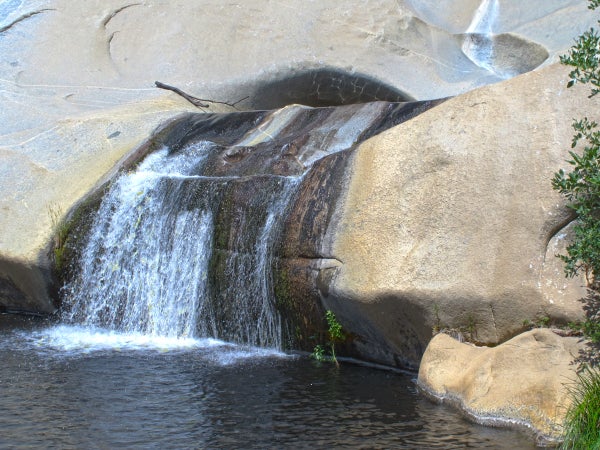
A roaring waterfall such as the iconic Niagara, Yosemite or Iguazu is a mesmerizing sight. But waterfalls are not just beautiful; they also help scientists decipher Earth’s history because of the geologic clues that can be gleaned from the ways they form. Now a new study reveals a previously unknown origin of waterfalls: They can form spontaneously.
Scientists have long known some waterfalls form due to external forces. For instance, retreating glaciers leave behind big valleys with steep walls that rivers run over, forming falls. A waterfall can develop due to differences in rock type or arise where rivers intersect with a geologic fault that has moved, producing a vertical step. But the new research, published this week in Nature, suggests those outside influences are not always necessary—and that these beautiful formations can effectively create themselves.
To investigate the dynamics of waterfall formation, a team of researchers set up a small-scale model of a river measuring eight meters long and a meter deep, with the whole setup tilted at an angle. They filled their river with a completely smooth layer of polyurethane foam—which acts as a good stand-in for bedrock for the purposes of such an experiment, says study author Joel Scheingross, an assistant professor in geological sciencesat the University of Nevada, Reno.
On supporting science journalism
If you're enjoying this article, consider supporting our award-winning journalism by subscribing. By purchasing a subscription you are helping to ensure the future of impactful stories about the discoveries and ideas shaping our world today.
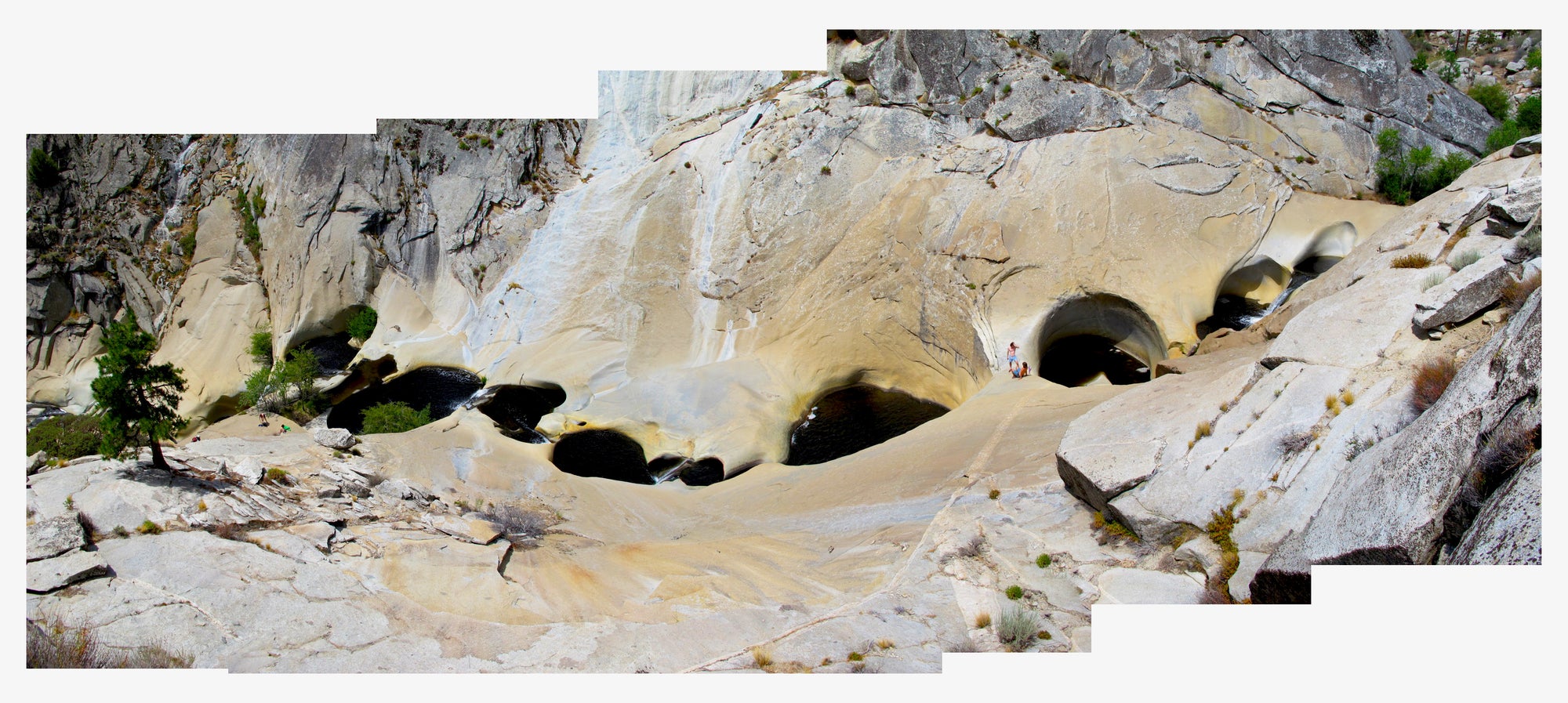
The series of pools and falls that make up the Seven Teacups. Credit: Devon Santy Flickr
The team then ran a combination of water and sediment from the top of the “river,” and observed what happened over several hours. Within minutes the flow began to abrade the foam, creating dents—but not in a uniform way. “What happens is you have some areas that are eroding a little bit faster than others, and some areas that are eroding a little bit slower than others” Scheingross says. “This is just part of the dynamics of it—the chaos, if you will, of the way nature works.”
This process created a feedback, or self-reinforcing behavior: The areas that initially eroded faster became deeper more quickly than others did, as water and sediment accelerated into the rapidly developing dents. This feedback created a series of slides and pools in the foam. When the pools reached a certain depth, the water’s force could no longer move sediment from their deepest parts, so they started trapping it. That is when waterfalls began forming. “What we observe is that you form waterfalls when one pool fills with a layer of gravel, and that pool stops eroding,” Scheingross says. “But the pool immediately downstream of it wouldn’t have this sediment layer, and it would continue to deepen with time, so that the difference in height—between the upstream pool that’s not eroding and the downstream pool, which is still eroding—grows with time.”
During the experiment, two waterfalls formed this way. “It’s the first experimental demonstration that this can happen,” says Bob Anderson, a professor of geological sciences at the University of Colorado Boulder who was not involved in the study. “It’s cleverly done in using this foam as the substrate that’s being eroded. It’s hard to observe these kind of features evolving in rock because it takes so darn long.”
These types of waterfalls cannot form just anywhere, however—they need a bedrock river (versus one with loose riverbed sediment) with a steep enough slope, Scheingross says. He points to a couple of real-world waterfalls he thinks may have possibly developed spontaneously: one in the San Gabriel Mountains outside Los Angeles, and another, a series of falls just upstream of Yosemite’s famous Bridalveil Fall. But he and other researchers need to do more work before they can be completely confident which waterfall self-formed. He also plans to do more lab experiments to see if spontaneous waterfalls leave some kind of “fingerprint” scientists can use to identify them in the field.
Experts who were not involved in the study say the findings will help researchers better grasp how waterfalls originate—information that could help them piece together a broader picture of the geologic past. “We use landforms like a waterfall to interpret past changes in Earth’s history; we ascribe the presence of a waterfall to some bigger external forces such as climate or tectonic processes,” says William Ouimet, an associateprofessor in geomorphology at the University of Connecticut. “We will have to challenge that approach and be more careful when drawing those conclusions.”
Other experts, however, note the study likely will not significantly overturn earlier research. “I don’t think this means that all our past interpretations of landscapes are wrong. Maybe we can refine some,” says Nicole Gasparini, an associate professor of earth and environmental sciences at Tulane University. But she thinks the study is still significant and useful. “What it can do,” she says, “is help us to interpret and understand the details, and try to put the story together a little bit tighter.”