
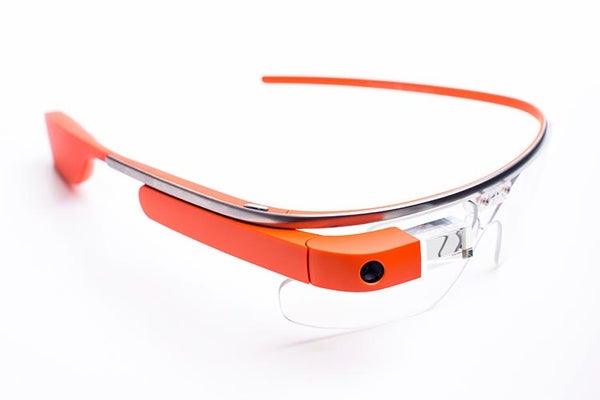
We've gotten our first glimpse at the next version of Google Glass, and it looks a lot like the first edition of Google's augmented reality headgear — though with a few key differences.
The pictures of a new Google Glass headset come from an FCC filing first spotted by 9to5Google. They show a headset that looks an awful lot like the one Google stopped selling back in January, though the prism on this version appears larger for an expanded field of view. There's also a hinge, suggesting you'll be able to fold up this version of Google Glass and put it in a pocket when you're not using it.
MORE: Augmented Reality Glasses: What You Can Buy Now (or Soon)
On supporting science journalism
If you're enjoying this article, consider supporting our award-winning journalism by subscribing. By purchasing a subscription you are helping to ensure the future of impactful stories about the discoveries and ideas shaping our world today.
Those changes along with the suggestion that this new build looks sturdier than the previous version of Google Glass supports earlier reports from both 9to5Google and The Wall Street Journal that the next version of Google's headset will be aimed at businesses, specifically in industries like manufacturing and health care. Those reports have said the next version of Glass will have better battery life than its predecessor — something we complained about in our review of the original Google Glass — as well as a faster processor and improved camera. In keeping with its newfound enterprise focus, the updated Google Glass will be water-resistant and rugged, 9to5Google says.
Consumers balked at Google Glass's $1,500 price tag, but Google executives said earlier this year that they remain committed to developing the wearable. Tony Fadell, the founder and CEO of Nest, was tapped to oversee the overhaul of Glass.
Copyright 2015 Toms Guides , a Purch company. All rights reserved. This material may not be published, broadcast, rewritten or redistributed.