
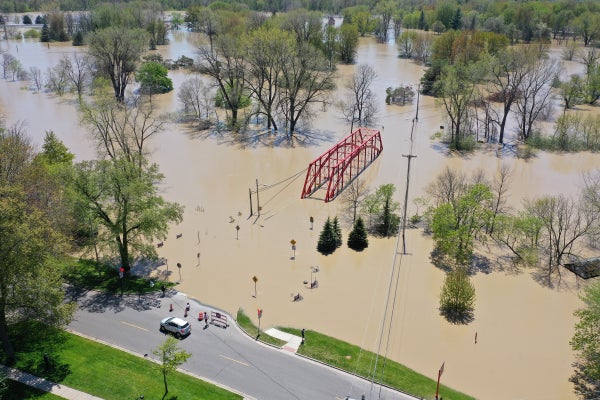
Hundreds of studies on nature-based solutions to extreme events show that “green infrastructure” is often cheaper and more effective than engineered projects like dams, levees and sea walls, according to a new analysis.
Experts say federal and state governments should heed those findings and increase funding for natural landscapes and systems to reduce climate disaster risk. Solutions include floodplain restoration and “living shorelines” along vulnerable coasts and rivers.
The 44-page “Protective Value of Nature” report released this morning is a joint effort between the National Wildlife Federation and Allied World, a global insurance and reinsurance firm.
On supporting science journalism
If you're enjoying this article, consider supporting our award-winning journalism by subscribing. By purchasing a subscription you are helping to ensure the future of impactful stories about the discoveries and ideas shaping our world today.
“The science is clear—both model-based studies and empirical evidence from around the world show that natural infrastructure can provide significant, quantifiable levels of protection for communities from natural hazards, and is often more cost-effective than structural infrastructure,” said Jessie Ritter, a study co-author and NWF’s director of water resources and coastal policy.
She said Congress has a “real and important opportunity” to promote the use of nature-based infrastructure by incorporating funding mechanisms into upcoming surface transportation and water resources bills, as well as in any economic recovery package associated with the COVID-19 pandemic.
The report comes as the nation gears up for hurricane and wildfire seasons, which forecasters say could be severe. Thousands of U.S. communities face risk from coastal storms and fires as well as extreme rain events, inland flooding, heat waves and drought.
“In an era where natural disaster risks continue to mount, we find that there is a significant opportunity to expand the use of natural approaches to protect people and property,” Wesley Dupont, chief operating officer of Allied World Group, said in a statement.
The report draws on more than 300 published articles from academic, government and nonprofit-affiliated researchers. It also cites case studies from numerous states where nature-based solutions prevented or reduced the impacts of climate disasters.
For example, a 2019 study from the Federal Emergency Management Agency found that an abandoned golf course in Clear Lake, Texas, helped protect 300 residents and 150 homes from flooding during Hurricane Harvey. Before the storm, the course had been converted into a 178-acre park and wetland by the local water authority.
Similarly, research from the Massachusetts Department of Fish and Game determined that removing three old dams and restoring natural floodplains reduced flood risk to surrounding areas and prevented the chance of dam failure. Dam removal was also 60% less expensive than repairing and maintaining the structures over the next 30 years, the study found.
Bilal Ayyub, director of the University of Maryland’s Center for Technology and Systems Management and a leading expert on disaster risk mitigation, said nature-based protections provide co-benefits, called “ecosystem services,” that improve water quality, preserve fish and wildlife habitat, and add recreational value to shorelines and forests.
“Each one has benefits to offer,” Ayyub, who is a distinguished member of the American Society of Civil Engineers, said in a telephone interview. “Historically, engineers gravitated toward gray infrastructure” because such projects can bring strength, reliability and permanence to a problem.
Today, he said, both types of risk mitigation projects are needed to protect communities.
“I don’t think there is one solution that is the best fit for all situations,” he said. “We have to determine what it is we’re protecting, what is its value, and what does it cost to provide one solution or the other.”
Reprinted from Climatewire with permission from E&E News. E&E provides daily coverage of essential energy and environmental news at www.eenews.net.