
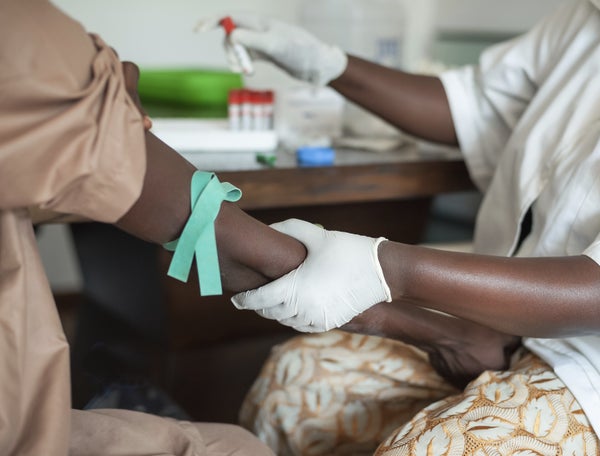
The first snapshot of health complications facing Ebola survivors in Sierra Leone presents a dismal picture of their road to recovery. A new study has found that up to four months after blood tests indicated that they were Ebola-free, more than half of survivors continue to suffer from joint pain, headaches or muscle pain. And more than 40 percent of survivors complain of sleeplessness and visual problems. Perhaps most worryingly, almost all the survivors—96 percent—reported being rejected by their communities after they were released from the hospital. The majority said they were still too scared to return home.
The data on the challenges facing Ebola survivors comes from a small survey of 81 individuals in Kenema District, Sierra Leone, who recovered from the disease. It was conducted in October 2014. Although the sample includes only a tiny fraction of the roughly 9,000 cases who have survived the Ebola outbreak in that country, the study does provide some insights into the issues survivors are facing and reaffirm what has been seen among survivors in prior outbreaks. Lingering symptoms were seen in most survivors regardless of their sex or age, although they were generally less frequent among teenagers.
Roughly half of all those infected with Ebola in west Africa during the past year died, but there are likely more than 13,000 survivors in Sierra Leone, Guinea and Liberia, according to figures from the World Health Organization (WHO). Some of their maladies, such as vision impairment, had been seen among small numbers of documented Ebola survivors after previous episodes. Yet until this year’s massive outbreak researchers did not know how common these issues would be among survivors. Each new report of their symptoms provides a clearer window into the health care needs of this population.
On supporting science journalism
If you're enjoying this article, consider supporting our award-winning journalism by subscribing. By purchasing a subscription you are helping to ensure the future of impactful stories about the discoveries and ideas shaping our world today.
Certain health complications seen in the Sierra Leone survivors, such as pruritus (itchy skin) and hiccups are new and hard to explain. Hiccups, for example, are common among Ebola patients during the acute stage of illness but researchers still do not understand their relationship with the virus. There are other puzzling findings, too. For example, almost a third of survivors exhibit peeling of the skin, possibly the result of dehydration during Ebola infection. Alternatively, in some patients Ebola may have prompted renal failure that left them with some skin drying and peeling. Similarly, yellowing of the eyes in some survivors may reflect underlying liver or blood ailments, but it is hard to know for sure.

The new Sierra Leone findings, published in Clinical Infectious Diseases, are similar to those seen in another study of Ebola survivors in Guinea during this outbreak and to earlier anecdotal or official reports of health issues among survivors of earlier flare-ups. Like the other works, the latest study was observational and did not include baseline data on what health issues these patients might have had before they contracted Ebola. As a result, investigators cannot know for certain that their problems stem from Ebola. Still, “despite the lack of controlled data, there are some things that appear so frequently and prominently in Ebola virus disease survivors that we feel comfortable attributing them to [Ebola],” says senior study author Daniel Bausch, a physician on WHO’s Clinical Care Team for Ebola.
Another health survey from this outbreak, which chronicled the medical issues among recent survivors of this Ebola outbreak in Guinea, included similar reports of chronic joint and muscle pain as well as eye pain and vision loss. Yet despite the many similarities across reports, researchers still do not know what to make of many of the trends. The Sierra Leone survey picked up erectile dysfunction as an issue, for example, but such sexual dysfunction is also present in any population. That leaves the question: Did Ebola prompt higher figures among survivors? It is hard to say. “We know that Ebola virus is maintained in the urogenital tract in men,” Bausch notes. Yet if the sexual dysfunction stems from a physical issue or might be more psychosocial—with men worrying about transmitting virus to their partners via their semen—is hard to pin down, he observes. Recent preliminary findings have suggested that genetic material from the virus can survive in semen much longer than previously thought, but whether or not those traces of the virus are infectious and could be transmitted from person to person is not yet known. Like so many questions with Ebola, researchers are still short on answers.