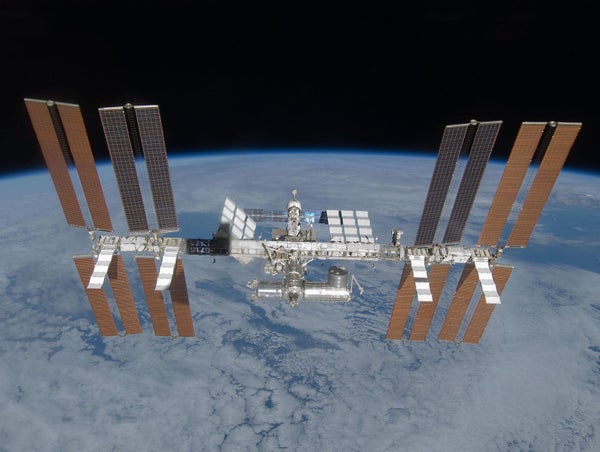
Ground Control to Major Google: Space Station Street View Is Here
Take a self-guided tour and imagine what it is like to be an astronaut
By Leslie Nemo
Forget views of side streets and poorly parked cars – why not explore the International Space Station (ISS) instead? Earlier this week Google Maps released its first-ever Street View in space, and now, Earthlings can virtually navigate through astronauts’ home away from home. Because no one could drive a van and camera around the ISS, Thomas Pesquet, a European Space Agency astronaut, collaborated with NASA and Google to take images with DSLR cameras already aboard the craft. The tunnel-like interior is filled with wall-to-wall cables and equipment, so navigation is trickier than on Earth. But a scattering of helpful tags identify locations and equipment that people unfamiliar with astronaut life might not recognize. Yours truly ended up in a bathroom on one of her first navigational clicks, but maybe you will have better luck.
If the blurbs of information only increase your curiosity about daily life on the ISS, NASA astronaut Suni Williams explains all about sleeping, eating and manipulating that strange toilet in this video from 2014, below. Pair her explanations with the immersive Street View and maybe you will feel like an astronaut yourself.
On supporting science journalism
If you're enjoying this article, consider supporting our award-winning journalism by subscribing. By purchasing a subscription you are helping to ensure the future of impactful stories about the discoveries and ideas shaping our world today.
Subscribe to Support Independent Journalism
Great science journalism requires human expertise, time, effort and creativity. And it costs money. That’s why I and the journalists here at Scientific American hope you’ll join our community.
When you subscribe, you are supporting staff and freelance journalists who are passionate about telling science stories that are true, important and compelling. Our editors and reporters are often experts in their fields, which means they understand the nuances of big discoveries and can untangle the breakthroughs from the hype. With a subscription, you are also supporting rigorous fact-checking to ensure the words we publish are precise and accurate. And you’re supporting original illustrations, graphics and photos that bring you closer to an advanced laboratory, an ice sheet in Antarctica or a space mission in orbit. You’re helping us craft other types of high-quality journalism as well: Our newsletters are carefully written, edited and curated by staffers you have or will come to know and love. Our Science Quickly podcast is based on original reporting, collaboration with editors and scientists and exacting production.
Subscriptions keep this engine running so we can continue to deliver thoughtful, rigorous and independent science journalism to you. In an era of viral misinformation, this work is crucial. If you value what we do, I hope you’ll consider joining us as a subscriber