
By Tom James
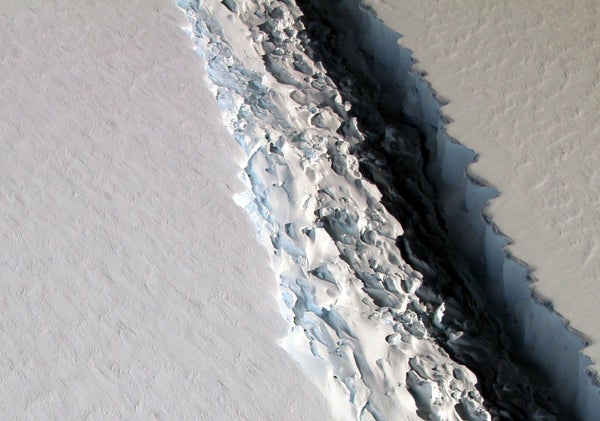
(Reuters) - A crack that could create an iceberg the size of Delaware - and destabilize one of the largest ice shelves in the Antarctic - has branched out and begun to widen more quickly, a scientist said on Wednesday.
The new fissure has turned toward the shelf's ocean edge, potentially speeding up the iceberg's process of breaking off, said Dan McGrath, a geophysicist with the U.S. Geological Survey and a project partner with UK-based monitoring group Project Midas, which reported on the new crack on Monday.
On supporting science journalism
If you're enjoying this article, consider supporting our award-winning journalism by subscribing. By purchasing a subscription you are helping to ensure the future of impactful stories about the discoveries and ideas shaping our world today.
"It’s taking basically a sharp hook toward the calving front," said McGrath, using a technical term to describe the ocean side of the ice shelf.
It is reasonable to link the event and the shrinking ice shelves in Antarctica to global warming, Richard Alley, a glaciologist at Penn State University who is not connected with project.
An overwhelming majority of scientists say human activity - including the burning of oil, gas and coal - is the main driver of rising global temperatures.
Located on the Larsen C ice shelf, the fourth largest in Antarctica, the new Antarctica crack is an offshoot of a rupture that gained notice after growing dramatically in 2014, and last year was forecast to cause the separation of a 1,900-square-mile (5,000-square-kilometer) iceberg within years.
For comparison, the projected size of the iceberg is more than 300,000 times the size of the 125-meter (410-foot) iceberg that sunk the Titanic, putting it among the largest on record.
While not getting longer, the original crack has continued to widen steadily, at a rate of about 3 feet (1 meter) per day, a rate that has increased since the new crack formed, according to the Midas report.
McGrath, who has studied the shelf extensively, said the combination of the new crack and the faster widening could point to an imminent separation of the berg, even as soon as this summer.
The loss of so much ice would shrink the shelf by about 10 percent, leaving it with the smallest area ever recorded.
Scientists from the group also warned in 2015 that the loss of such a large mass of ice would create a "significant risk" of the shelf as a whole becoming unstable and breaking up, although McGrath cautioned the outcome is not guaranteed.