
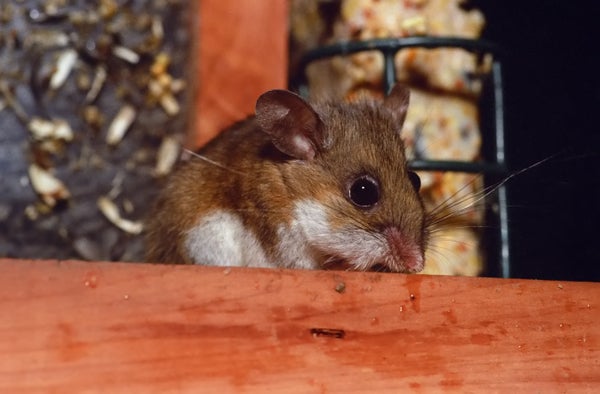
A surprising number of rodents captured during a recent study in the Pacific Northwest were carriers of the Sin Nombre virus, a type of hantavirus that belongs to the same family as the Andes type behind an ongoing outbreak that has so far killed three people and sickened several others.
The number of rodent carriers were higher than previously suspected, says Stephanie Seifert, an assistant professor at Washington State University and co-author of the study, which was published in late April in Emerging Infectious Diseases.
The research was conducted in the summer of 2023, predating the current hantavirus outbreak, which began on a cruise ship in April. The researchers collected fecal and tissue samples from a total of 189 rodents of various kinds, including several types of voles, mice and chipmunks, on farms and in other areas in eastern Washington State and western Idaho. The samples were tested for hantavirus antibodies, which can indicate if a rodent has ever carried the virus, and for viral RNA, a sign of active infection.
On supporting science journalism
If you're enjoying this article, consider supporting our award-winning journalism by subscribing. By purchasing a subscription you are helping to ensure the future of impactful stories about the discoveries and ideas shaping our world today.
The results showed that around 10 percent of the animals had Sin Nombre at the time the samples were taken, while almost 30 percent had detectable antibodies.
Sin Nombre is not transmissible from human to human, unlike the Andes virus at the center of the cruise ship outbreak. Instead people become infected when they are exposed to rodents and their excretions, such as their feces and urine. That limitation has made Sin Nombre cases scarce, but it is still deadly: The virus was first identified in 1993 after 11 people died and almost two dozen more got sick in the Four Corners region of the U.S. It has a mortality rate between 35 and 50 percent.
Human cases of hantavirus are relatively rare in the U.S., with most cases occurring in the Southwest. But a disproportionate number of the total cases have been seen in the Pacific Northwest: Of the 864 cases in the U.S. between 1993 and 2022, 109 were in Idaho, Oregon or Washington State, according to the study. Even so, few studies have examined how common the viruses are in the area’s rodents. That makes it hard to say if the number of rodents carrying the virus there has grown over the years, Seifert says.
Still, climate change may play a role in the virus’s spread, Seifert says. Wetter winters can lead to increased vegetation, which, in turn, can support a larger rodent population. Warmer winters can also cause prolonged breeding seasons and improved odds of surviving the cold, which can also boost the population. The way humans use the land can also increase their exposure to the animals. Seifert notes that farmers in the area have begun using techniques that don’t employ tilling, which would scare the critters off.
“We know tilling is disruptive to rodents, which flee the croplands to surrounding refuge, including rural homes and outbuildings,” she says. “Will conversion to no-till lead to fewer human-rodent interactions or support more robust and diverse rodent communities that continuously expand outward to neighboring homes and support a higher baseline prevalence in [Sin Nombre virus]? I don’t know the answer.” But more research could promote a better understanding, she adds.
Whether such a study will take place is an open question, however. Seifert says her team’s current funding for the project has run out.
“If there is anything folks in the U.S. should take from this, it’s that expertise on infectious disease systems is not like a faucet that you can turn on and off when convenient,” she says. “If you want hantavirus or [Ebola-causing virus]experts to be here, ready to jump into action with answers and solutions, then we need to fund our public health research and basic science.”