
Most seafood lovers have never heard of domoic acid, but it might be time for them to start paying attention — the material, occasionally found in shellfish, is a serious health risk, and researchers have recently linked its presence with climatic phenomena.
Domoic acid is a neurotoxin produced by certain kinds of algae. Because algae are the base of the marine food chain, the acid gets transferred to other animals, including shellfish. The shellfish-harvesting industry keeps a careful eye on domoic acid levels, since it can have serious consequences for human health.
Now, researchers think they’ve found a way to predict the occurrence of domoic acid, and it’s related to climate patterns over the ocean: the El Niño events and Pacific decadal oscillations.
On supporting science journalism
If you're enjoying this article, consider supporting our award-winning journalism by subscribing. By purchasing a subscription you are helping to ensure the future of impactful stories about the discoveries and ideas shaping our world today.
“When water’s unusually warm off our coast, it’s because the circulation and patterns in the atmosphere has changed, bringing warm water from elsewhere — and this is happening at the same time that we also see high domoic acid in shellfish. It has a very strong mechanistic connection,” said Morgaine McKibben, lead author of the study and a doctoral student with Oregon State University.
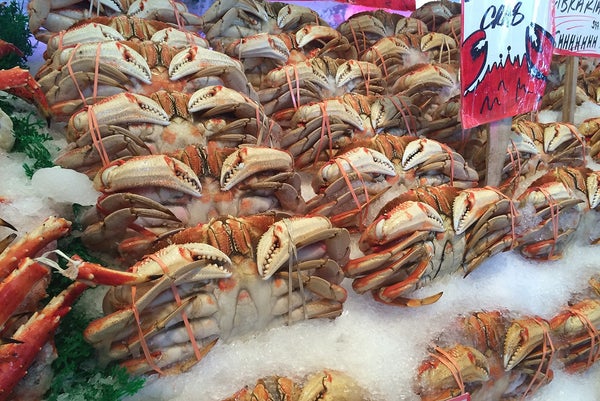
The acid, she explained, is exuded by tiny algae and then works its way up the food chain. While it doesn’t harm animals like razor clams or crabs, it continues to reside in their tissues and can cause serious health issues if eaten by humans, like short-term memory loss.
The researchers looked into data sets on the presence of domoic acid in shellfish in the Pacific Northwest, compared it with the timing of climatic phenomena and found a strong link.
“That's really key, because it could help make predictive statements about what could be a good year versus a bad year for shellfish harvesting,” added McKibben.
Warning system needed
That could have huge repercussions for the shellfish industry. In 2015, fisheries in Washington had to be closed for around six days due to a spike in domoic acid levels. It led to estimated losses of around $9 million.
“If they've already made their harvest and then there's a closure, they can't distribute to the public — so they lose money on the effort to harvest as well as the product. There's further money lost to the shellfish industry as these closures last,” McKibben said, adding that the presence of the toxins can continue for up to a year.
The recreational harvesting industry can also be affected — a fun activity for tourists along the West Coast and especially popular in Oregon and Washington, where families go clamming. Coastal economies, including hotels and restaurants, could suffer if the visitors stayed away.
Having some sort of advance warning system could make it easier for the shellfish industry to handle this economic loss, according to Matt Hunter, with the Oregon Department of Fish and Wildlife and co-author of the study.
“Agencies like mine can use this model to anticipate domoic acid risks and prepare for periods of more intensive monitoring and testing, helping to better inform our decisions and ensure the safety of harvested crab and shellfish,” he said in a statement.
Resource managers and fishery owners can easily access the data needed to identify natural climate oscillations, said Angelicque White, associate professor with the Oregon State College of Earth, Ocean and Atmospheric Sciences.
“You can find sea surface temperature anomalies online, you can look at the signs of the Pacific decadal oscillations and El Niño as well — the data aren't behind some sort of paywall, anyone can Google it,” she said. “We're using climate data that the U.S. federal government supports, so it's freely available and you can go and find it, rather than needing an academic or scientist to look through a microscope and find it for you.”
The study drew from data sets that go back 20 years, something that the researchers know is rare in the scientific community. It's essential, they feel, that such records become more common.
“These time series are incredibly valuable, and continuing the support for them, so that we can monitor change in the oceans, is critical,” White said.
Reprinted from ClimateWire with permission from E&E News. E&E provides daily coverage of essential energy and environmental news at www.eenews.net.