
By Kieran Guilbert
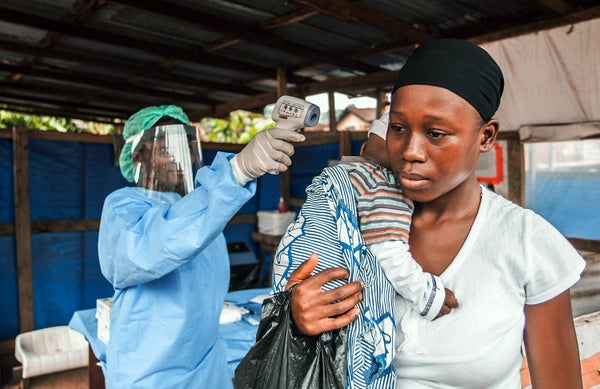
DAKAR (Thomson Reuters Foundation) - Health workers are rushing to the site of a fresh Ebola outbreak in Guinea to bolster efforts to contain the virus and prepare for the likelihood of more cases, aid agencies said on Friday.
Four people in the southern region of Nzerekore were tested on Thursday and two of them were found to have Ebola. They were all from Korokpara, a village where three people from the same family have died in recent weeks from diarrhoea and vomiting.
On supporting science journalism
If you're enjoying this article, consider supporting our award-winning journalism by subscribing. By purchasing a subscription you are helping to ensure the future of impactful stories about the discoveries and ideas shaping our world today.
The World Health Organisation (WHO) and aid agencies have sent experts to investigate the origin of the new cases and to identify, isolate, vaccinate and monitor all of their contacts.
The Alliance for International Medical Action (ALIMA) has reopened its Ebola treatment unit in Nzerekore, while the United Nations children's agency (UNICEF) is reinforcing its team in the region and providing protective equipment and medicine.
"There has been a very professional and experienced response across the board," said Augustin Augier of ALIMA, which admitted the two patients, a child and his mother, to its treatment unit.
"We are doing all we can to be ready to receive more cases," he said, adding that ALIMA were flying in more staff from Paris.
More than 28,500 people have been infected and 11,300 have died since the world's worst recorded Ebola epidemic began in December 2013 - mostly in Guinea, Liberia and Sierra Leone.
While the epidemic has come under control, experts have warned of the risk of new flare-ups, as Ebola can linger in the eyes, central nervous system and bodily fluids of survivors.
The two fresh cases in Nzerekore, where the Ebola outbreak began in 2013, were reported just hours after the WHO declared neighbouring Sierra Leone's latest flare-up over.
Guinea had been nearing the end of a 90-day period of heightened surveillance when the fresh cases were reported - the country's first known re-emergence of Ebola after the outbreak was officially declared over there at the end of December 2015.
"The heightened surveillance means mechanisms were in place and that we were vigilant and prepared to deal with the flare-up," said Guy Yogo, UNICEF's deputy representative in Guinea.
"The population is now aware of the disease and listening to the guidance it receives from the authorities," Yogo added.
It was not immediately clear how the villagers from Korokpara had contracted Ebola but the area had resisted efforts to fight the disease in the initial epidemic.
