
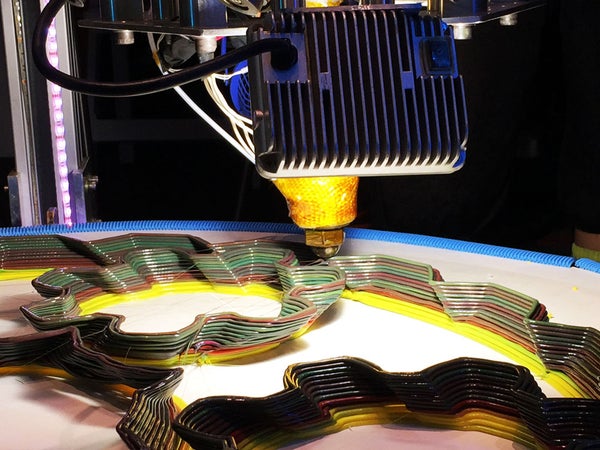
The chill in the air last weekend was a reminder that fall has arrived in New York City. Time for the leaves to turn colors, for the stifling subway stations to air out and for hundreds of do-it-yourself tech enthusiasts to descend on the New York Hall of Science in the Borough of Queens for the annual New York Maker Faire. For the seventh time in as many years the science center was converted into an indoor/outdoor ode to the DIY movement, this year featuring mammoth 3-D printers, homemade Star Wars droids and acres of hands-on activities.
More than 200 Maker Faires are held worldwide each year, purporting to showcase technologies that empower people to build things they cannot—or would rather not—buy. The events’ main appeal is that they let hobbyists, students and those in search of technological oddities get their hands on not just finished products but also the components used to create them. Tech companies have for years talked up “wearable” computers that fit into clothing and jewelry. At the World Maker Faire, chipmaker Intel let visitors to its booth tinker with larger versions of the accelerometer and gyroscope modules and circuit boards that enable wearables to track their own movement and orientation.
View a slide show of other highlights from the 2016 World Maker Faire
On supporting science journalism
If you're enjoying this article, consider supporting our award-winning journalism by subscribing. By purchasing a subscription you are helping to ensure the future of impactful stories about the discoveries and ideas shaping our world today.
Start-ups also thrive at maker events, where they can demonstrate their technologies in person rather than simply through videos posted to an online campaign for crowdfunding. Kickstarter, one of the most prominent crowdfunding Web sites, featured several newcomers at its booth—including the Wazer, a desktop water jet capable of cutting through titanium.