
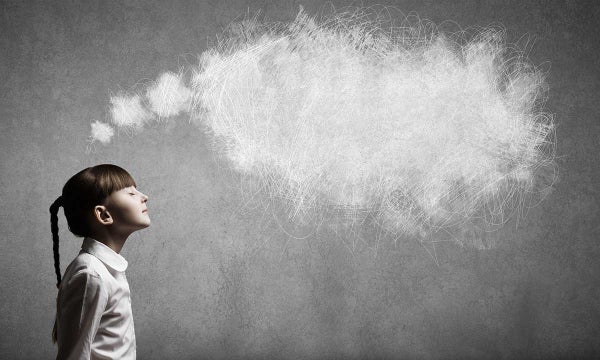
What you are describing is termed mental imagery, or the ability to create a mental picture of a person, place or experience without any external cues or stimuli. People differ greatly in the extent to which their recollections are visual.
Constructing a mental image relies on coordinating several different processes in the brain. The hippocampus, long regarded as the main storage site for memories of complex events, has recently—and perhaps surprisingly—been found to be important for imagining new or fictitious events. Indeed, recent research has shown that patients with damage to the hippocampus not only have problems remembering the past, they also struggle to imagine the future.
Although the hippocampus may be involved in combining various elements from a real or imagined scene, it probably has little to do with the experience of “seeing” an image in your mind. Creating a mental image requires further coordination involving regions of the brain that contribute to vision, such as the parietal lobes—which aid in perceiving spatial relations and perspective—and the temporal lobes—which help us to discern shape, color and faces. When we recall a friend's face, for instance, we activate the same neurons that would be involved in actually seeing the person if he or she was standing right in front of us, as well as those neurons in the hippocampus that encode memories. Thus, intriguingly, with mental imagery, we see from the inside out rather than the outside in.
On supporting science journalism
If you're enjoying this article, consider supporting our award-winning journalism by subscribing. By purchasing a subscription you are helping to ensure the future of impactful stories about the discoveries and ideas shaping our world today.
Question submitted by Alexandra Coppinger, Melbourne, Australia