
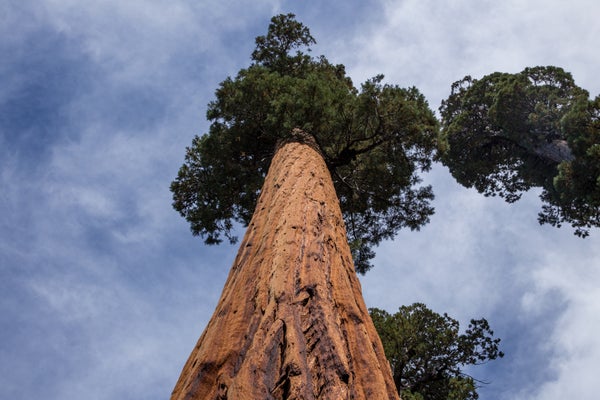
Inhabitants of Boise, Idaho, watched with trepidation earlier this year as the city's oldest, tallest resident moved two blocks. The 105-year-old sequoia tree serves as a local landmark, not only for its longevity but also because renowned naturalist and Sierra Club co-founder John Muir provided the original seedling. So, when Saint Luke's Health System found that the 10-story-tall conifer stood in the way of its planned hospital expansion, officials called tree-moving firm Environmental Design.
The Texas-based company has developed and patented scooping and lifting technology to move massive trees. Weighing in at more than 800,000 pounds, the Boise sequoia is its largest undertaking yet. “I [had] lost enough sleep over this,” says David Cox, the company's Western region vice president—and that was before the hospital mentioned the tree's distinguished origin.
Before the heavy lifting began, the team assessed the root system and dug a five-foot-deep cylinder, measuring 40 feet in diameter, around the trunk to protect all essential roots. After encapsulating the root ball in wire mesh, the movers allowed the tree to acclimate to its new situation for seven months before relocating it. The illustration details what followed.
On supporting science journalism
If you're enjoying this article, consider supporting our award-winning journalism by subscribing. By purchasing a subscription you are helping to ensure the future of impactful stories about the discoveries and ideas shaping our world today.
.png?w=1350)
Credit: Brown Bird Design; Source: “Tree Mover System with Airbags,” by Mark A. Merit and Thomas P. Cox. Patent No. US 8,844,449. Published September 30, 2014