
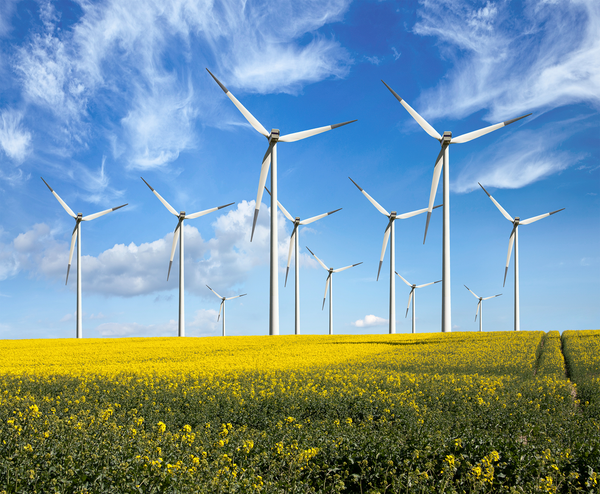

In the U.S. 8% of our energy generating capacity comes from wind turbines—that’s more than any other renewable resource—and wind power has more than tripled over the past decade. More than half of that capacity comes from just five states: Texas, Iowa, Oklahoma, California, and Kansas. According to the American Wind Energy Association, there are over 56,000 wind turbines across the country that provide a capacity of ~96,000 megawatts, enough to power more than 15 million homes. The Department of Energy projects that by 2050, that wind capacity will increase to more than 400 gigawatts.
How can you get in on this growing wind energy action? Many electric utilities allow you to tap into wind—and other renewable—sources of power if you pay a little bit more for a “green” option. More consumers signing up for green energy means those utilities will work to procure more of it. Let’s take a look at how wind turbines work and some of the potential pros and cons.
On supporting science journalism
If you're enjoying this article, consider supporting our award-winning journalism by subscribing. By purchasing a subscription you are helping to ensure the future of impactful stories about the discoveries and ideas shaping our world today.
How Do Wind Turbines Work?
Wind power actually starts with the Sun. In order for the wind to blow, the Sun first heats up a section of land along with the air above it. That hot air rises since a given volume of hot air is lighter than the same volume of cold air. Cooler air then rushes in to fill the void left by that hot air and voila: a gust of wind.
The Office of Energy Efficiency and Renewable Energy describes a wind turbine as “the opposite of a fan.” Simply stated, the turbine takes the energy in that wind and converts it into electricity. So how does it do that?
First, the wind applies pressure on the long slender blades, usually 2 or 3 of them, causing them to spin, much like the wind pushes a sailboat along its path through the water. The spinning blades then cause the rotor, or the conical cap on the turbine, and an internal shaft to spin as well at somewhere around 30 – 60 revolutions per minute.
The ultimate goal is to spin an assembly of magnets in a generator which will, well, generate voltage in a coil of wire thanks to electromagnetic induction. Generators require faster revolutions, however, so a gear box typically connects this lower speed shaft to a higher speed shaft by increasing the spin rate to around 1000 to 1800 revolutions per minute. These gear boxes are costly as well as heavy, so engineers are looking to design more “direct-drive” generators that can work at the lower speeds.
»Continue reading “How Does Wind Energy Work?” on QuickAndDirtyTips.com