
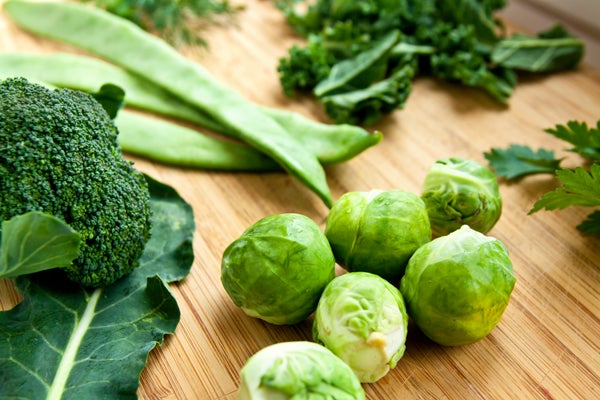
As a culinary scientist, I’m constantly straddling the border between two worlds. My career is predicated on marrying two disparate skill sets and ideologies—those of the chef and those of the biochemist—to reinforce the strengths and cover the weaknesses of each side. There are gaps in this hybrid armour, however—situations where science, technology and culinary creativity have yet to catch up with our ambition. At times, these puzzles can appear maddeningly simple. For instance, we have yet to discover an effective method for manufacturing a good bottled beverage containing naturally green ingredients.
Water hazards
Chemically, the preservation of green is all about coddling chlorophyll molecules. At the centre of all members of the chlorophyll family is a chlorin ring, containing an array of aromatic hydrocarbon rings anchored at the centre by a magnesium ion. These arrays are precisely tuned to interact with certain wavelengths of light, so any change in the structure of chlorophyll can potentially change its colour. The most fragile component of the array is the magnesium ion, which can easily be displaced by hydrogen ions in aqueous solutions, turning the pigment from vibrant green to dull brown or yellow.
On supporting science journalism
If you're enjoying this article, consider supporting our award-winning journalism by subscribing. By purchasing a subscription you are helping to ensure the future of impactful stories about the discoveries and ideas shaping our world today.
This effect is enhanced in acidic environments, which cooks have long combated by using neutral or alkaline water for blanching green vegetables, thus minimising the number of hydrogen ions vying for a place at the centre of the chlorin ring. While the two most common culinary chlorophylls, chlorophyll a and b, have a long hydrocarbon chain attached to the chlorin ring, rendering the pigment virtually insoluble in water in its native form, in most situations heating can accelerate acid or alkaline hydrolysis of that hydrocarbon tail, turning the chlorin ring highly soluble—and vulnerable in a sea of eager hydrogen ions.
It would be a sound strategy to avoid adding water completely (by roasting or frying, for example) were it not for the natural acids lurking within the vacuoles of the plant tissue itself. Upon rupture of the vacuole membrane at the high temperatures required for cooking most green plant foods, the internal pH of the tissue plummets, turning it brown from the inside out. Another method for helping chlorophyll remain green is to replace the precariously situated magnesium ion with other multivalent cations that are more difficult for hydrogen to displace. One of the most effective examples is copper, which can create sturdy, electric-green pigments in food. Unfortunately, copper, zinc, aluminium, and other metals that work well in these scenarios have low toxicity thresholds and are thus strictly regulated.
Turning up the heat
Heat seems to be a common component of several scenarios that end in dull, brown food, so why heat green ingredients at all? Obviously, because we need to tenderise some of the tougher, more fibrous plant foods like artichokes and asparagus. But heat can also provide two less obvious methods for actually improving green colours in our food.
Plant tissues naturally contain thousands of microscopic air bubbles wedged between their cell walls. These air bubbles scatter light at the surface of the tissue, diluting the vibrant colour of the chlorophyll within. Briefly heating plant tissues by techniques such as blanching or quickly grilling causes these bubbles to expand and escape the tissue, unveiling the full, vibrant green hue.
The other colourful benefit that we get from heating green food is the inactivation of enzymes. Many green ingredients contain enzymes that can turn them brown, either by degrading the structure of chlorophyll or by catalysing the oxidation of phenolic compounds. The latter case has caused the downfall of countless guacamoles, which turn brown not because of any degradation of chlorophyll, but by the formation of brown pigments fabricated by polyphenol oxidase enzymes.
Many culinary problems have simple, virtually black-and-white solutions. Unfortunately, preserving greenness in the kitchen is not one of them. If we successfully capture a flash of vibrant green in a dish, I say that we should enjoy it then and there. That is until someone figures out a natural, non-toxic way to preserve green indefinitely, in which case they should contact me immediately—we can make millions.
Ali Bouzari is a culinary scientist and co-founder of Pilot R+D
This article is reproduced with permission from Chemistry World. The article was first published on July 20, 2016.