
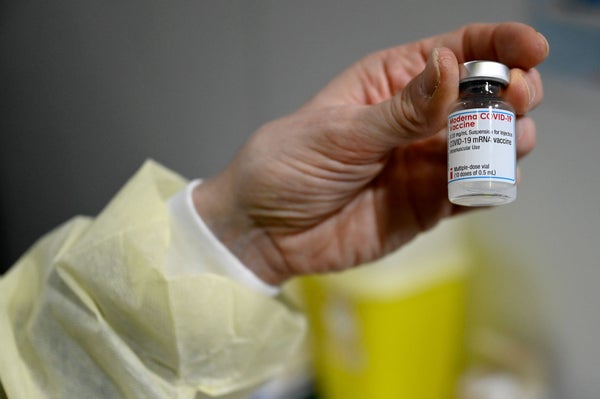
President Biden’s promise to ensure that communities of color are not left behind in the vaccine rollout shows that he is ready to tackle the pervasive inequities of health care laid bare by the COVID-19 pandemic. But turning that promise into practice is not just a case of establishing more vaccination sites. We first need to know where those at high risk within underserved communities are located in order to set up mobile vaccination sites in the right places, and that will require the federal government to use a scientific, data-driven system for identifying those most in need.
The current process for identifying such individuals needs to be fine-tuned. It relies on the CDC’s Social Vulnerability Index (SVI), which was originally developed to help FEMA deliver aid to communities most in need in the aftermath of natural disasters. SVI takes into account census data on some important variables that correspond to individual health, such as housing density and status of employment. But it does not consider other critical risk factors associated with COVID-19 such as access to fresh food, air quality and access to public transportation in a given neighborhood.
A better measure of social vulnerability would be Social Determinants of Health (SDOH), which are the conditions in the environments where people live that directly impact their health. As opposed to SVI, SDOH does consider access to fresh food, air quality and access to public transportation, and therefore provides a more precise picture of the underlying factors that can contribute to vulnerability when people are exposed to the virus. Public health officials need SDOH attributes at a household level so that no one slips through the cracks.
On supporting science journalism
If you're enjoying this article, consider supporting our award-winning journalism by subscribing. By purchasing a subscription you are helping to ensure the future of impactful stories about the discoveries and ideas shaping our world today.
But even SDOH is not, in and of itself, enough—as it does not consider clinical risk factors such as chronic illness, which is a recipe for overlooking minority communities. That’s because conditions like obesity, diabetes and hypertension—all major risk factors for bad outcomes with the virus—are more prevalent in these communities. Consider the fact that sickle cell disease (SCD), an inherited blood cell disorder most common among African Americans, is correlated with death rates from COVID-19 that are three to four times higher than those seen in the general population. We need a system that puts these people at the front of the vaccination queue.
It’s true that factoring in clinical data along with social determinants presents a logistical challenge for the government, but that’s not a reason to skip this vital step. Government can partner with major health insurers and local community providers, which have the best view of their members’ clinical history and knowledge of local vulnerable communities. Health insurers can help public health officials fill in the blanks left by SVI and SDOH in order to identify individuals at highest risk of ending up in an ICU bed or worse when exposed to the virus.
I know firsthand that health insurers are ready, willing and able to help. As the vaccines were going through approval, my company completed a project for the Department of Health and Human Services where we worked with Blue Shield of California to identify the insurer’s most vulnerable members in the state and optimal pathways to reach them (e.g., pharmacies or primary care providers) once the vaccines were available.
Only when we have a precise risk assessment tool that weighs SDOH and clinical data can we determine exactly where additional doses and mobile vaccination sites are needed. And even then, we cannot simply trust that those most at risk will show up. We need to develop channels of communication that can help engage those most at risk in underserved communities by leveraging trusted community partners—such as religious groups and social service agencies—to help drive awareness of the importance of getting vaccinated. And for workers with two or more jobs, we need to bring vaccinations to their workplace.
The president has taken a critical first step by prioritizing vaccine access for communities of color. The necessary next step is to unlock the power of science and data to surgically identify individuals in communities of color who are most at risk and ensure the vaccine reaches them first.