
The ongoing hantavirus outbreak carries disturbing echoes of the early days of COVID: people falling ill on a cruise ship from a relatively unknown pathogen, with no validated test available to quickly tell who is infected and who is not.
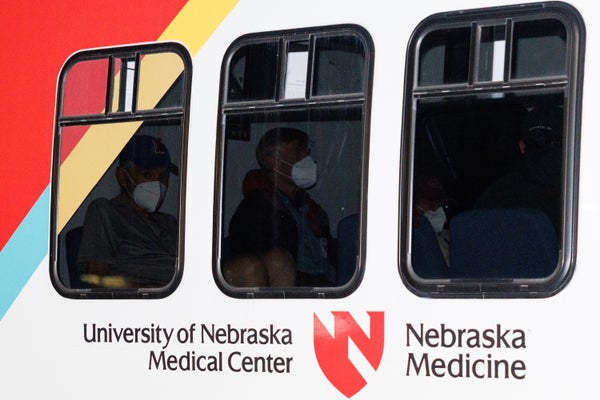
Researchers are racing to change that. Over the course of May 9 and 10, scientists at the Nebraska Public Health Laboratory worked around the clock to develop a polymerase chain reaction (PCR) test for Andes hantavirus, which has sickened at least 10 and killed three people who sailed on board the MV Hondius. A PCR test is critical because more infections may yet emerge: Officials are monitoring at least 41 people in the U.S. for signs of the virus, which can take up to 42 days to show symptoms; at least 18 of them are staying at the National Quarantine Unit in Omaha, Nebraska. None of these people have tested positive for the virus since their arrival.
Some other countries have used PCR tests to detect hantavirus, but in the U.S., the Centers for Disease Control and Prevention does not yet have a validated one for diagnosis. The CDC is developing such a test, but in the meantime, the agency has been using a blood test that can detect antibodies in infected people who are symptomatic, but it can’t detect low levels of the virus in asymptomatic people. The Nebraska lab, which supports the National Quarantine Unit, is trying to bridge that gap by using its PCR test to try and determine if people at the quarantine unit and elsewhere in the country who may have been exposed to sick passengers have the virus.
On supporting science journalism
If you're enjoying this article, consider supporting our award-winning journalism by subscribing. By purchasing a subscription you are helping to ensure the future of impactful stories about the discoveries and ideas shaping our world today.
Peter Iwen, director of the Nebraska Public Health Lab, and deputy director Emily McCutchen chatted with Scientific American to explain how they developed the Andes virus PCR test in a single weekend, how it works and how it’s being used now.
[An edited transcript of the interview follows.]
How did your lab come to develop this hantavirus test?
IWEN: We are part of what’s called the Laboratory Response Network, and one of the roles for us as a public health lab is to provide rapid detection and rapid response to biothreat agents. We are here in Omaha, where the National Quarantine Unit is located, as well as the Region VII Special Pathogen Treatment Center [a biocontainment unit that can treat patients with highly hazardous infectious diseases]. When we hear about issues where patients or travelers, in the case of the quarantine unit, come to Omaha, our first indication is to say, “What can we do to do laboratory support for that unit?”
Usually our first call is to the CDC to find out what their capabilities are, and in this particular case, our contact at the CDC told us they were able to do serology [antibody] testing on symptomatic people, but they did not have an assay, such as a PCR assay, to be able to test asymptomatic people. So that kind of got our ball rolling.
What’s the difference between a serology test (like the CDC has) and a PCR test?
IWEN: Serology looks for a response to actually being infected—production of antibodies—and that’s why the CDC is saying that they will test [blood] from people who are symptomatic. This could be a few days after symptoms appear.
PCR was designed to be able to test low levels of virus, for instance, prior to symptoms. We know that for [a type of hantavirus known as] the Sin Nombre virus, that prior to developing symptoms, people actually have a little bit of virus in their blood, so we can get a quicker result to say, “yes, they do have the virus” by doing PCR.
Does the PCR test use a nasal swab like COVID?
MCCUTCHEN: This is a blood draw. It goes through an extraction procedure where we’re going to isolate out the viral RNA from that sample. If there was Andes hantavirus viral RNA in that, we would isolate that out, and then we go through a polymerase chain reaction, or PCR, following that to amplify those viral particles in a way that we can essentially be able to detect them. So it’s the same idea as with COVID, just the source is different because it’s a different type of virus.
How long did it take to develop the PCR test?
IWEN: It’s not an easy thing to do, if you think about trying to procure the necessary reagents and get the right protocols in place to do the testing on top of it. We worked pretty hard over the weekend [of May 9 and 10]. It was a long weekend. We did not even have the reagents available to start a validation until Saturday morning [May 9].
We needed things such as RNA [genetic material] from the Andes hantavirus to prove that our test was working. We needed the other reagents for our PCR test development. We needed extraction kits for extracting the RNA. We had to get all of this in place before we could even start developing a validated assay. About Saturday afternoon is when we started looking at, “This is what we have, this is the process that we’re going to follow to try to develop this test.”
[McCutchen] worked late into Sunday night. I am the CLIA [Clinical Laboratory Improvement Amendments] director for the public health lab, so I’m the person who has to sign off to make sure that we meet all the requirements for a validation. And I actually didn’t sign off until about nine o’clock Sunday night, and the travelers showed up in our unit at 2:30 A.M. on Monday morning.
Can you explain what CLIA validation is?
MCCUTCHEN: CLIA is actually a federal requirement. It [was established by] the Clinical Laboratory Improvement Amendments of 1988, and it is a code of federal regulations that ensures that testing performed in a laboratory in Nebraska is comparable in quality and results to a test performed anywhere else in the nation.
Part of the CLIA ’88 rules say that if you are going to develop an assay, you have a certain set of things that you must meet. For example, you have to test accuracy, you have to test sensitivity, you have to test precision. And you have to do robust testing to ensure that it meets those federal requirements.
There was one U.S. passenger that the CDC initially said had tested “mildly positive” for the virus—by which it meant the results were inconclusive—and who has subsequently tested negative. Did you conduct that initial testing?
MCCUTCHEN: That was testing that was performed in the Netherlands, before these passengers even came to Nebraska. We tried to get information on testing that was performed, source of that—have not yet been successful in that.
[Editor’s Note: No people connected with the cruise ship outbreak in the U.S. have tested positive as of Monday, May 18.]
Are you regularly testing all the people who are quarantining at the Nebraska unit and elsewhere?
IWEN: I’m not even 100 percent sure that they’ve even been all tested. I believe that these people have to give consent to have their blood drawn. As a laboratory, when we have a specimen in hand, we run a test. We are prepared to test whenever there’s a request for testing. We have offered testing not just for those in our quarantine unit here in Omaha, but we’ve done other testing for other areas in the United States [where people with possible exposure are quarantining].
Are you able to scale up production of your test if more are needed?
MCCUTCHEN: We hope to not have to scale these up, but during the validation process, we took special consideration into which instruments we were going to use that allowed for the ability to scale up if necessary. So, yes, it can be done.
How has communication with the CDC been going?
IWEN: I’m going to say everything has been going okay. There’s been a lot of difficulties occurring at CDC, but they’re trying to work with us as best they can, and I would say that we are connected, we are talking, and I think that we try to help each other as best we can.
Are you communicating with the WHO?
MCCUTCHEN: I personally do not. [Several] days ago, the University of Nebraska Medical Center was designated as a WHO collaborating center.
IWEN: This is an international event, and having the WHO as part of our discussion, to me, seems very, very important.