
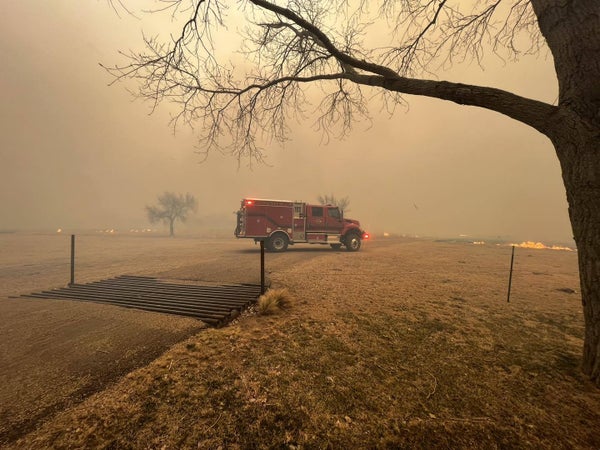
The Smokehouse Creek Fire in Texas has ballooned to become the largest in the state’s history, scorching more than one million acres of the Texas panhandle since the first flames appeared on Monday.
Though the cause of ignition is still being investigated, the factors that helped it become such a monster blaze are clear: abundant dry grasses and weather patterns that brought low humidity and strong winds.
Winter might not seem like prime fire season, but wildfires in this region are “pretty typical for this time for year,” says Heather Gonzales, program specialist for wildfire prevention at the Texas A&M Forest Service. The period from mid-February into April is called the “dormant” fire season, whereas the summer fire season is termed the “growing” season. Hard winter freezes can effectively “cure” the grasses that cover much of the panhandle, making them act as fire fuel, Gonzales says. These grasses “almost need constant precipitation to have any moisture in them,” she adds. Drier grasses burn much more readily and intensely.
On supporting science journalism
If you're enjoying this article, consider supporting our award-winning journalism by subscribing. By purchasing a subscription you are helping to ensure the future of impactful stories about the discoveries and ideas shaping our world today.
This year had above-normal “fuel loading” of such grasses because of a strong growing season brought on by wetter than usual weather, Gonzales says.
And then a couple of freezes this winter primed the grasses, setting the stage for wildfire when a weather pattern brought unusual warmth to parts of the country—along with low humidity and wind gusts of more than 40 miles per hour to the panhandle. “That creates an increased fire environment” that is “very susceptible to any type of ignition,” Gonzales says.
The winds helped the Smokehouse Creek Fire roughly double in size in just two days. It also merged with a much smaller nearby blaze. And as of Thursday, it has burned more than 30,000 acres in Oklahoma, near the state’s border with Texas. As of Thursday afternoon, the fire was only 3 percent contained, and there were concerns that a return of drier, windy conditions over the coming weekend could exacerbate it and other wildfires in the area.
The previous largest wildfire in Texas’s history, the 2006 East Amarillo Complex Fire, also occurred in a dormant season. It burned more than 900,000 acres and killed 13 people. The Smokehouse Creek Fire was known to have killed one person as of Thursday afternoon.
It would take a dedicated study to say how much more likely or worse a fire like this, or the weather conditions that contributed to it, has been made by climate change. But studies have shown that this region and many others in the U.S. are likely to experience more and bigger wildfires as global temperatures continue to rise with the unabated emissions of greenhouse gases. Scientists don’t expect to see many shifts in wind patterns occur with climate change, says John Abatzoglou, a professor of management of complex systems at the University of California, Merced—but they do expect warmer temperatures and lower relatively humidity, both of which dry out fuels. There is a clear increase, Abatzoglou adds, in the worst fire weather days: those when all the ingredients are in place, just waiting for a spark.
