
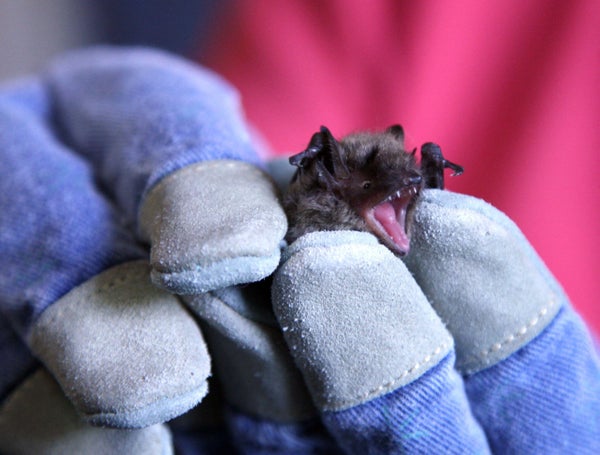
The wildlife trade is expansive. Whether legal or not, it encompasses pet sales, meat markets, furs and even medicine. About 25 percent of mammal species are involved in some part of the trade, and scientists have warned that it may contribute to zoonotic diseases—illnesses that arise from pathogens that jump from animals to humans, as had occurred with the virus that causes COVID. But exactly how and how often these diseases are passed from animals to humans isn’t always clear.
A new study published today in Science reveals a close correlation between species in the wildlife trade and animals that are known to have passed pathogens on to humans.
“There’s a strong link,” says Jérôme Gippet, an ecologist at the University of Fribourg in Switzerland. “What we could calculate is that, for every 10 years that the species is on the wildlife market, it shares one additional pathogen with humans.”
On supporting science journalism
If you're enjoying this article, consider supporting our award-winning journalism by subscribing. By purchasing a subscription you are helping to ensure the future of impactful stories about the discoveries and ideas shaping our world today.
The researchers combed through more than 40 years of data tracing which animal species are involved in the legal or illegal wildlife trades. Then they compared this information with a dataset called CLOVER, which lists the pathogens found in different species. The team’s analysis revealed that among 2,079 traded mammal species, 41 percent shared at least one transmissible pathogen with humans. For comparison, just 6.4 percent of nontraded animals shared such a pathogen.
The researchers had expected that humans would be more likely to encounter germs from animals they interacted with closely more often. The study highlights the need for better disease surveillance and outbreak preparation, however, Gippet says.
“Before [the study] my idea of disease transmission risk in wildlife was more like, ‘Oh, there’s some dirty species,’” he says. “But what we show here is: it’s not really about the species; it’s more about the humans.”
Not all zoonotic pathogens that humans encounter lead to outbreaks or pandemics on the scale of COVID. Some don’t harm our species or aren’t capable of human-to-human transmission. Still, any increase in exposure and transmission comes with the risk of a virus or bacterium evolving to become something more concerning.
The study “emphasizes the importance of having much better controls and regulation of the wildlife trade,” says Wayne Getz, an ecologist at the University of California, Berkeley, who was not involved in the new work.
Preparing for potential disease outbreaks involves increasing global disease surveillance, using predictive models to determine which pathogens should be a research priority and creating action plans for when potential outbreaks are detected. The study authors hope their research inspires more preparation.
“There’s no safe trade,” Gippet says. “Trade, in itself, creates the opportunity for pathogen transmission.”