
NASA's Johnson Space Center (JSC) in Houston is closed today (Aug. 27) to all but mission-critical staff, due to heavy rainfall caused by Hurricane Harvey. Mission Control, which oversees the operation of the International Space Station, "remains operational and fully capable of supporting [the station]," according to NASA's website.
The main entrance to JSC, and many of the roads leading to JSC's other entrances, were flooded as of this morning, according to the JSC Emergency Management website. (Since that update was posted this morning, rainfall has begun again in the area around JSC, which could mean flooding). On some of the flooded streets, cars have been abandoned on the roads, officials said. [Hurricane Harvey: Photos of the Massive Storm from Space]
"Unless you are mission essential, stay off the road and stay safe," officials said in a post on the JSC website posted at 10:15 a.m. CDT (11:15 a.m. EDT/1515 GMT) today.
On supporting science journalism
If you're enjoying this article, consider supporting our award-winning journalism by subscribing. By purchasing a subscription you are helping to ensure the future of impactful stories about the discoveries and ideas shaping our world today.
A flash flood warning was in effect until 12:30 p.m. CDT (1:30 EDT/1730 GMT), according to the Communications on JSC emergencies Twitter account (JSC SOS). A tornado warning was also in effect for the area around JSC, until about 4:15 a.m. CDT (5:15 a.m./0915 GMT) today, according to the National Weather Service Houston Twitter account.
Hurricane Harvey has been downgraded to a tropical storm, but continues to generate "a tremendous amount of rainfall over areas including Houston," according to the JSC emergency website. The storm has reportedly dropped 20 to 30 inches (50 to 75 centimeters) of rain on the Houston area already, according to the Houston Chronicle. Five deaths have been reported in relation to the storm.
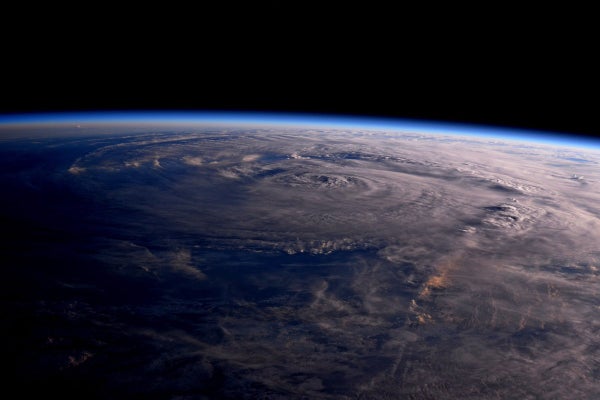
Astronaut Jack Fischer, who is currently on the space station, has been posting pictures of the storm from space.
"'Houston, we have a hurricane.' Our thoughts & prayers are with folks feeling Harvey’s wrath, as dawn breaks after a long night of rain," Fischer wrote as a caption to a photo of the swirling cylone posted on Saturday morning (Aug. 26).
EDITOR'S RECOMMENDATIONS
Copyright 2017 SPACE.com, a Purch company. All rights reserved. This material may not be published, broadcast, rewritten or redistributed.