Hurricane Irene Hits Bahamas, Threatens U.S. East Coast

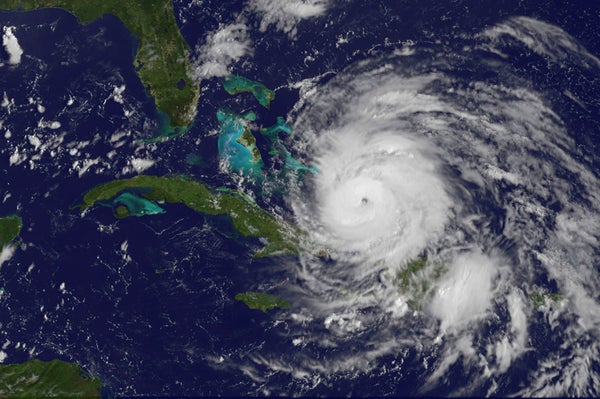
Hurricane Irene hit the southeastern Bahamas on the morning of August 24 with top winds at 115 mph, the National Hurricane Center reported .

NASA/NOAA GOES Project

Join Our Community of Science Lovers!


On supporting science journalism

If you're enjoying this article, consider supporting our award-winning journalism by subscribing. By purchasing a subscription you are helping to ensure the future of impactful stories about the discoveries and ideas shaping our world today.


Hurricane Irene hit the southeastern Bahamas on the morning of August 24 with top winds at 115 mph, the National Hurricane Center reported. On the previous day, GOES-13 satellite (One of the Geostationary Operational Environmental Satellites) captured this image of the approaching storm. The southern tip of Florida is visible in the upper left corner of the image.

The National Hurricane Center expects Irene to move across the Bahamas through August 24 and 25. By the morning of the latter, the center expects the hurricane to reach Category 4 intensity—it's at Category 3 currently—and remain "large and powerful" for the next five days. It may travel in a curved path north, touching land in North Carolina on August 27 before heading up the eastern coast of the U.S. Evacuations are already underway in one coastal North Carolina county, Bloomberg reported.

Irene's forecast path gets more uncertain later on, so the hurricane may move out to sea or move further inland. But even out at sea, Irene's 50-mile radius of hurricane-force winds and 205-mile radius of tropical storm winds could still batter the East Coast.

—Francie Diep

It’s Time to Stand Up for Science

If you enjoyed this article, I’d like to ask for your support. Scientific American has served as an advocate for science and industry for 180 years, and right now may be the most critical moment in that two-century history.

I’ve been a Scientific American subscriber since I was 12 years old, and it helped shape the way I look at the world. SciAm always educates and delights me, and inspires a sense of awe for our vast, beautiful universe. I hope it does that for you, too.

If you subscribe to Scientific American, you help ensure that our coverage is centered on meaningful research and discovery; that we have the resources to report on the decisions that threaten labs across the U.S.; and that we support both budding and working scientists at a time when the value of science itself too often goes unrecognized.

In return, you get essential news, captivating podcasts, brilliant infographics, can't-miss newsletters, must-watch videos, challenging games, and the science world's best writing and reporting. You can even gift someone a subscription.

There has never been a more important time for us to stand up and show why science matters. I hope you’ll support us in that mission.

Thank you,

David M. Ewalt, Editor in Chief, Scientific American

Subscribe