
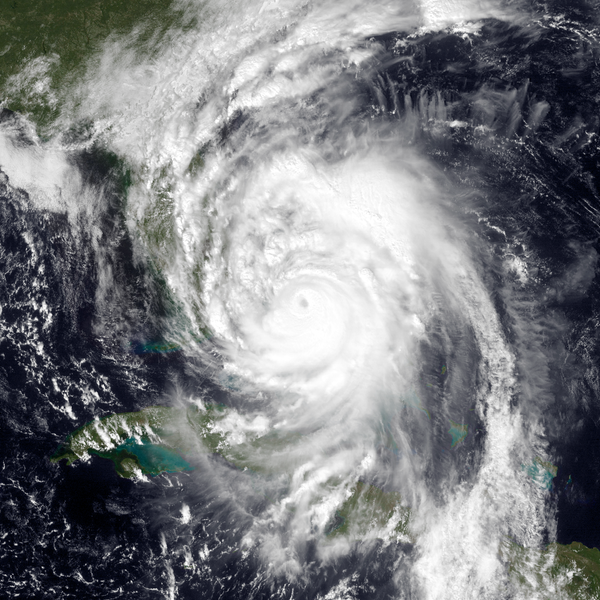

NASA is battening down the hatches ahead of Hurricane Matthew's impending Florida landfall.
The agency's Kennedy Space Center (KSC), near Cape Canaveral, Florida, is closed today (Oct. 5) and tomorrow (Oct. 6) to prep for Hurricane Matthew, which is expected to slam into the region full-force early tomorrow morning. The space center is located on Merrit Island, on Florida's east coast.
"Kennedy Space Center is now in HurrCon 1 status, meaning a hurricane is imminent. Hurricane preparations at Kennedy were completed early last night, and remaining employees were then sent home," NASA officials wrote in a blog post today.
On supporting science journalism
If you're enjoying this article, consider supporting our award-winning journalism by subscribing. By purchasing a subscription you are helping to ensure the future of impactful stories about the discoveries and ideas shaping our world today.
A "ride-out team" of 139 people will stay at KSC throughout the closure period to make sure the facility's most important buildings are safe and deal with any emergencies that may arise.
"After the hurricane has passed and winds have dropped below 50 knots (approximately 58 mph), damage around the space center will be assessed and the Damage Assessment and Recovery Team will then report for duty," NASA officials added in the blog post.
As of 2 p.m. EDT (1800 GMT) today, Matthew was a Category 4 hurricane, with maximum sustained wind speeds of 140 mph (225 km/h), according to the U.S. National Hurricane Center (NHC). The storm was 125 miles (200 km) east-southeast of West Palm Beach, Florida, and was moving northwest at 14 mph (23 km/h).
Matthew could intensify into a Category 5 hurricane, the most powerful type, before making landfall in Florida, some experts have said. (The sustained winds of Category 5 hurricanes top 157 mph, or 253 km/h).
To learn more about Hurricane Matthew and its potential impacts on Florida and other areas, go to the NHC's special Matthew page here:http://www.nhc.noaa.gov/#MATTHEW
Powerful Hurricane Matthew Seen From Space | Time-Lapse Video
Three Hurricanes Seen From Space Station On Same Day | Time-Lapse Video
Copyright 2016 SPACE.com, a Purch company. All rights reserved. This material may not be published, broadcast, rewritten or redistributed.