
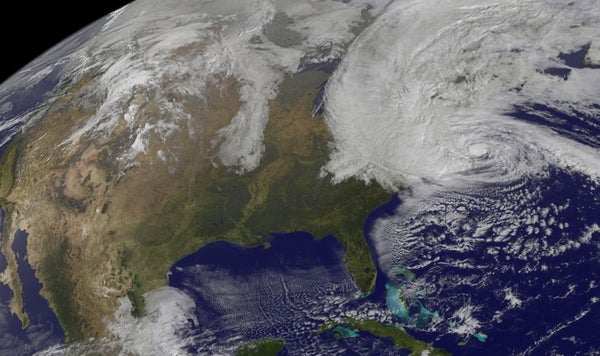
The satellite photo above shows Hurricane Sandy looming over the eastern seaboard on Monday, October 29. The National Oceanic and Atmospheric Administration's geostationary GOES 13 satellite acquired the image at 10:40 A.M. Eastern Daylight Time, as the heart of the storm hovered over the Atlantic Ocean east of Virginia. The scale of the storm is remarkable: Sandy's hurricane-force winds extend out some 175 miles, and tropical-storm-force winds extend nearly 500 miles.
The category 1 hurricane, with sustained winds of up to 90 miles per hour, is projected to head northwest, toward New Jersey and Delaware, and is "expected to bring life-threatening storm surge and coastal hurricane winds, plus heavy Appalachian snows," according to the National Weather Service (NWS). Sandy is forecast to make landfall near the southern coast of New Jersey on Monday evening.
Some coastal cities are already flooding, even before Sandy and the associated rainfall arrive in full force. In Atlantic City, N.J., Ocean City, N.J., and New York City, rising sea levels have filled low-lying streets with water. The combination of high tides, augmented by the full moon, and storm surges could raise water levels by a total of six to 11 feet in Long Island Sound and New York Harbor, according to a bulletin issued by the NWS National Hurricane Center in Miami.
On supporting science journalism
If you're enjoying this article, consider supporting our award-winning journalism by subscribing. By purchasing a subscription you are helping to ensure the future of impactful stories about the discoveries and ideas shaping our world today.
—John Matson