
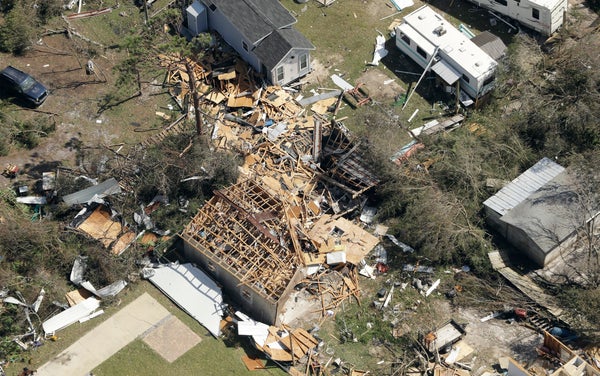
More than 32 million homes on the Atlantic and Gulf coasts are at risk of sustaining hurricane wind damage, according to a report released yesterday that provides the first measurement of wind risk in an era of climate change.
The at-risk properties have a combined value of $8.5 trillion, the real estate analytics firm CoreLogic Inc. said in its annual report on hurricane risk.
Previous hurricane reports by CoreLogic, a leading property risk researcher, have estimated only potential storm surge damage from hurricanes. Storm surge is less of a threat than wind, CoreLogic found, estimating that $1.9 trillion worth of property could sustain storm surge damage during the Atlantic hurricane season that began officially yesterday.
On supporting science journalism
If you're enjoying this article, consider supporting our award-winning journalism by subscribing. By purchasing a subscription you are helping to ensure the future of impactful stories about the discoveries and ideas shaping our world today.
“It’s important for people to know: Is it a dual threat or is it mostly wind that I should worry about?” said CoreLogic principal Tom Larsen.
Most properties at risk of storm surge damage are also at risk of hurricane wind damage.
The potential for wind damage has huge implications for insurance companies, which cover wind damage through standard homeowners policies. Flood damage, by contrast, is not covered in most homeowners policies, a distinction that pushes many people to buy separate policies to cover water damage.
“As hurricanes grow stronger, property losses will continue to mount and the insurance industry will see increased financial implications,” the CoreLogic report says.
Climate change and development patterns are increasing the potential for property damage as hurricanes generate more rainfall and as sea levels rise, intensifying storm surge. Since the 1980s, weather-related losses in the U.S. have increased by between 70% and 90% each decade, CoreLogic said.
“And this trend isn’t slowing,” the report says. “As climate change continues to reshape the way storms behave, the risk in these hurricane-prone areas will continue to increase.”
The increasing damage also is caused by people moving from “expensive metropolitan areas to high-risk, more affordable coastal areas,” the report says. “These areas are typically low-lying, hurricane prone and especially subject to the climate-related factors at play including sea level rise, extreme rainfall events and possible increases in hurricane intensity.”
The New York City metropolitan area, which includes parts of New Jersey but not Long Island, continues to have the greatest financial exposure to hurricane damage, with $1.7 trillion worth of property at risk, CoreLogic found. That’s more than triple the $555 billion worth of property that is at risk in second-place Miami, which includes Miami-Dade, Broward and Palm Beach counties in Florida.
Florida accounts for six of the 10 metropolitan areas facing the greatest hurricane risk. In addition to Miami, the at-risk areas are Tampa, Fort Myers, Bradenton, Jacksonville and Naples.
Other areas in the top 10 are New Orleans, which is ranked third; Virginia Beach, Va., ranked fifth; and Houston, ranked eighth.
The report finds that metro areas face different threats.
In New Orleans, storm surge and hurricane winds are projected to cause roughly similar amounts of damage.
But in Houston, hurricane winds are projected to cause nearly nine times as much property damage as storm surge.
“Houston is about 12 miles inland,” Larsen of CoreLogic said. “During Hurricane Ike in 2008, we saw wind can go deeper inland and really affect the housing. But storm surge will be primarily focused on the coastal area.”
In New Orleans, by contrast, “the homes are much closer to the water and more vulnerable” to storm surge, Larsen said.
Reprinted from E&E News with permission from POLITICO, LLC. Copyright 2021. E&E News provides essential news for energy and environment professionals.
