How to Spot Clandestine Nuclear Bomb Tests

Illicit detonations are anything but secret

Join Our Community of Science Lovers!


On supporting science journalism

If you're enjoying this article, consider supporting our award-winning journalism by subscribing. By purchasing a subscription you are helping to ensure the future of impactful stories about the discoveries and ideas shaping our world today.


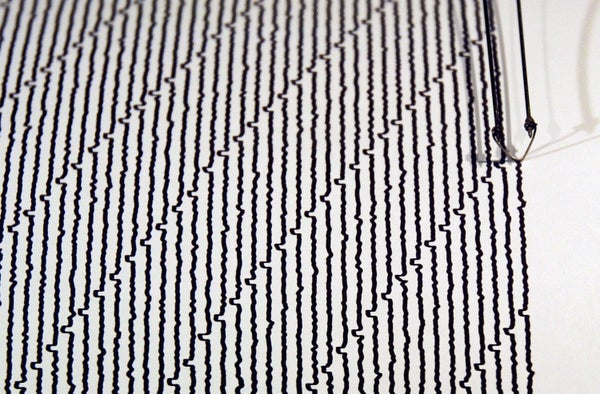
In September 2017 North Korea tested its largest nuclear bomb yet. It was 10 times the blast strength of any of the five previous underground detonations (map). How do we know? A global network of more than 300 earthquake-monitoring stations stands sentry. After an explosion, seismometers pick up two types of shock waves within minutes and alert intelligence officers. Scientists learn even more afterward. Since the last blast, they have combined the seismic signals with satellite images and other data to pinpoint more details, recently published, such as the precise location and bomb size (chart). Should North Korea—or any other nation—try another bomb, the world will know.

Credit: Katie Peek; Sources:“The Coupled Location/Depth/Yield Problem for North Korea’s Declared Nuclear Tests,” by Michael E. Pasyanos and Stephen C. Myers, in Seismological Research Letters. Published online August 8, 2018 (bomb sizes and blast depths); “Absolute Locations of the North Korean Nuclear Tests Based on Differential Seismic Arrival Times and Insar,” by Stephen C. Myers et al., in Seismological Research Letters. Published online August 15, 2018 (test locations); www.Norsar.No (seismograms); “The Punggye-ri Nuclear Test Site: A Test Tunnel Tutorial,” 38 North, May 23, 2018 www.38north.Org/2018/05/Punggyetunnel052318 (tunnel locations); U.S. Geological Survey (earthquake magnitudes)

Katie Peek is a science journalist and data-visualization designer with degrees in astrophysics and journalism. She is a contributing artist for Scientific American.

More by Katie Peek
Scientific American Magazine Vol 319 Issue 5This article was published with the title “Watching North Korea” in Scientific American Magazine Vol. 319 No. 5 (), p. 84
doi:10.1038/scientificamerican1118-84

It’s Time to Stand Up for Science

If you enjoyed this article, I’d like to ask for your support. Scientific American has served as an advocate for science and industry for 180 years, and right now may be the most critical moment in that two-century history.

I’ve been a Scientific American subscriber since I was 12 years old, and it helped shape the way I look at the world. SciAm always educates and delights me, and inspires a sense of awe for our vast, beautiful universe. I hope it does that for you, too.

If you subscribe to Scientific American, you help ensure that our coverage is centered on meaningful research and discovery; that we have the resources to report on the decisions that threaten labs across the U.S.; and that we support both budding and working scientists at a time when the value of science itself too often goes unrecognized.

In return, you get essential news, captivating podcasts, brilliant infographics, can't-miss newsletters, must-watch videos, challenging games, and the science world's best writing and reporting. You can even gift someone a subscription.

There has never been a more important time for us to stand up and show why science matters. I hope you’ll support us in that mission.

Thank you,

David M. Ewalt, Editor in Chief, Scientific American

Subscribe