In Search of Satisfaction

Foods that are especially satiating can decrease hunger, reduce body fat and lower blood sugar

Chris Gash

Join Our Community of Science Lovers!


On supporting science journalism

If you're enjoying this article, consider supporting our award-winning journalism by subscribing. By purchasing a subscription you are helping to ensure the future of impactful stories about the discoveries and ideas shaping our world today.


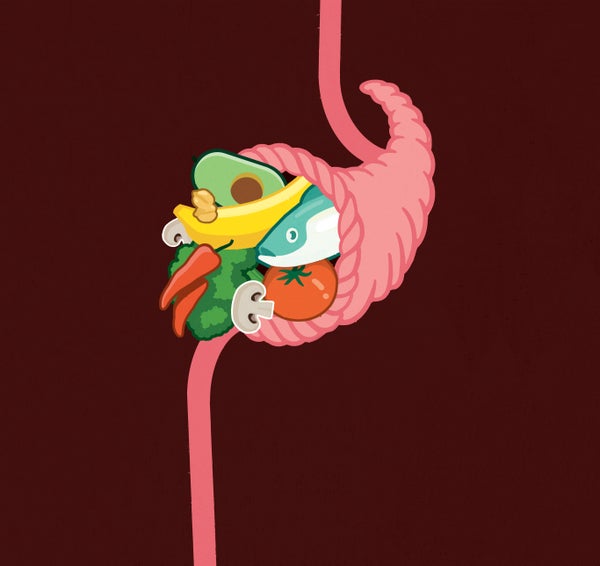
In 1944 researchers recognized that millions of people were at risk of famine as a result of the ravages of World War II. To investigate the impact of food deprivation on the human body, 36 healthy men volunteered to endure a six-month semistarvation diet and be observed by scientists and doctors. The result? Hunger made the men obsessed with food. They would dream and fantasize about eating. They reported fatigue, irritability and depression, along with decreased concentration, comprehension and judgment. Interestingly enough, the subjects were allowed about 1,500 calories a day, substantially more than many fad diets endured today. It’s no wonder that diets based on restricting food are unsustainable— according to some studies, approximately 95 percent of diets fail over the long term. As Shirin Panahi reports, researchers are now exploring whether a diet that centers on satisfying foods—healthy foods that make the eater happy (imagine that!)—might be the key to maintaining body weight after all (see “Have We Found a Diet That Truly Works?”). What a fulfilling prospect.

Elsewhere in this issue Jen Schwartz takes a compelling look at the science of the withdrawal tactic for preventing pregnancy (see “Can You Prevent Pregnancy with the Pullout Method?”), and Helen Shen covers a wave of research on how boosting the molecule nicotinamide adenine dinucleotide (NAD) might stave off the aging process. The trend is alarming some critics who worry about that molecule’s association with cancer (see “Cancer Research Points to Key Unknowns about Popular ‘Antiaging’ Supplements”). As always, enjoy this issue!

Andrea Gawrylewski is chief newsletter editor at Scientific American. She writes the daily Today in Science newsletter and oversees all other newsletters at the magazine. In addition, she manages all special editions and in the past was the editor for Scientific American Mind, Scientific American Space & Physics and Scientific American Health & Medicine. Gawrylewski got her start in journalism at the Scientist magazine, where she was a features writer and editor for "hot" research papers in the life sciences. She spent more than six years in educational publishing, editing books for higher education in biology, environmental science and nutrition. She holds a master's degree in earth science and a master's degree in journalism, both from Columbia University, home of the Pulitzer Prize.

More by Andrea Gawrylewski
SA Health & Medicine Vol 1 Issue 4This article was published with the title “In Search of Satisfaction” in SA Health & Medicine Vol. 1 No. 4 ()
doi:10.1038/scientificamerican082019-6YfhLt4RI47GuOLotO0DkV

It’s Time to Stand Up for Science

If you enjoyed this article, I’d like to ask for your support. Scientific American has served as an advocate for science and industry for 180 years, and right now may be the most critical moment in that two-century history.

I’ve been a Scientific American subscriber since I was 12 years old, and it helped shape the way I look at the world. SciAm always educates and delights me, and inspires a sense of awe for our vast, beautiful universe. I hope it does that for you, too.

If you subscribe to Scientific American, you help ensure that our coverage is centered on meaningful research and discovery; that we have the resources to report on the decisions that threaten labs across the U.S.; and that we support both budding and working scientists at a time when the value of science itself too often goes unrecognized.

In return, you get essential news, captivating podcasts, brilliant infographics, can't-miss newsletters, must-watch videos, challenging games, and the science world's best writing and reporting. You can even gift someone a subscription.

There has never been a more important time for us to stand up and show why science matters. I hope you’ll support us in that mission.

Thank you,

David M. Ewalt, Editor in Chief, Scientific American

Subscribe