
For the past five years the Quantum Shorts initiative from the Center for Quantum Technologies at the National University of Singapore has inspired artists and writers from around the world to try their hand at a unique kind of scientific storytelling. The contest alternates each year between calls for films or short stories that explore the ramifications of quantum mechanics. The key requirement? Each entry must take no more than five minutes to watch or read.
For 2016 the contest focused on film and drew more than 200 entries, with 10 finalists selected. Now, in partnership with Scientific American and Nature (as well as with several scientific institutions), Quantum Shorts 2016 has revealed this year’s first- and second-place winners as selected by a six-member panel of expert judges as well as a “people’s choice” winner selected via public online polling.
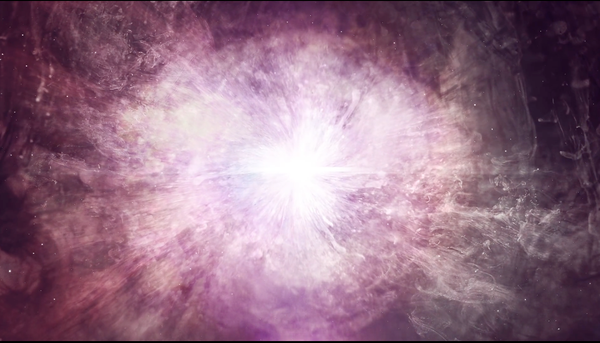
The overall winner is Novae, filmmaker Thomas Vanz’s breathtakingly beautiful visualization of a giant star’s explosive death by supernova and subsequent transformation into a black hole. Like a latter-day William Blake—the English poet and painter who famously mused about seeing “a world in a grain of sand” and “a heaven in a wild flower”—Vanz envisioned a supernova in drops of colored ink. Working for months in his garage in Paris, he filmed inks billowing through a water-filled fish tank, later using computer software to stitch and process the raw footage into his dramatic vision of stellar death. His behind-the-scenes shorts detailing the making of Novae are at least as entertaining as the final film itself.
On supporting science journalism
If you're enjoying this article, consider supporting our award-winning journalism by subscribing. By purchasing a subscription you are helping to ensure the future of impactful stories about the discoveries and ideas shaping our world today.
A supernova can form a black hole by compressing a star’s core to an infinitesimally minuscule size, creating a gravitational field so intense that it devours light itself. The compressed core of a black hole—a “singularity,” in the parlance of physics—is thus hidden behind a black, lightless “event horizon,” the boundary beyond which anything falling in cannot come back out. Black holes represent a mysterious union between gravity, which dictates the overall structure of the universe, and quantum mechanics, which describes the cosmos at subatomic scales. Probing the properties of these strange macroscale quantum objects is likely to be our best path forward to a deeper understanding of the nature of reality.
The runner-up, The Guardian, is also the people’s choice winner. The film uses a love triangle between three people to explore the counterintuitive nature of the quantum world, in which an entity can exist either as a particle or as a wave—or, really, as both at the same time, in a hazy cloud of probability. It is the brainchild of Chetan Kotabage, an assistant professor of physics at KLS Gogte Institute of Technology in Karnataka, India.
“I love that it is looking at quantum physics through a cultural lens,” says Eliene Augenbraun, Scientific American’s video producer and multimedia managing editor for Nature Research Group, who also served as a contest judge and chose The Guardian as her favorite.
Other entries that earned honorable mentions from the judges include Approaching Reality, Together—Parallel Universe and Bolero. Charlotte Stoddart, Nature’s chief multimedia editor and contest judge, says she was “really impressed by the quality of the filmmaking and the ideas.” You can watch all the finalists here.
The next call for Quantum Shorts entries will occur later this year. Continuing its annual alternation between cinema and prose, 2017’s contest will be for short stories. Announcements will be available via the Quantum Shorts Twitter account and Facebook page.