
COVID-19 vaccines offer a way out of the pandemic. The data on them are extremely promising. At this point, both approved vaccines show high effectiveness in preventing disease, and strong safety profiles with very, very low risks. But vaccination rates are low.
Although accurate information about the vaccines is available, not everyone knows where to find them. Some vaccination sites have become overwhelmed by those seeking to be vaccinated. A concerted disinformation campaign by the anti-vaccine movement has made many hesitant to take the vaccine. Rates of refusal have climbed well above 40 percent among nursing home staff, long-term care residents, first responders and nurses in hospitals that have vaccine. At this point, there is substantially more demand than vaccines in arms. If anyone is not yet ready to take the vaccine, there are plenty of others who would be very glad to do so.
But in some contexts, the situation is different. In some closed institutions, with residents that cannot readily leave, many of them at high risk, there may be grounds to mandate the vaccine. In one case, a large eldercare facility in Cleveland is requiring staff to be vaccinated, though it is providing medical and religious exemptions. To battle a virus that is now out of control and mutating rapidly, other workplaces may want to consider doing the same. It is time to think hard about mandates in some high-risk settings.
On supporting science journalism
If you're enjoying this article, consider supporting our award-winning journalism by subscribing. By purchasing a subscription you are helping to ensure the future of impactful stories about the discoveries and ideas shaping our world today.
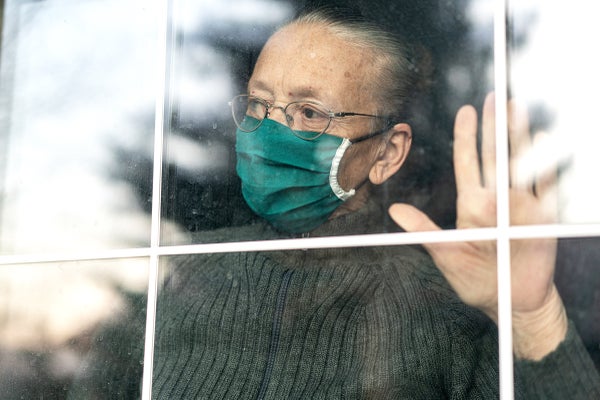
COVID-19 has had an especially high impact in long-term residential care facilities, and also prisons. High numbers of residents have died or become severely ill. In both types of institutions, residents cannot easily leave, and sometimes are at especially high risk. In long-term care facilities, residents are usually very elderly, and many of them have medical conditions that put them at high risk. Many prisoners too are elderly and have medical conditions that increase the risk of severe COVID disease.
In both types of institutions, the staff goes out into the community, and then comes back to interact with vulnerable residents that have no good way to avoid the contact. Under these circumstances, there may be justification to mandate vaccines.
There are important questions to consider in relation to imposing a mandate. Is it legal, and is it ethical? Can employers do it, and should they?
Traditionally, workplace vaccine mandates are legal, with a few caveats. Employers may have to negotiate with a union, if the workforce is unionized and the collective bargaining agreement requires it. Employers may have to provide medical exemptions to workers who have medical conditions that make vaccinating dangerous; and they may have to provide religious exemptions to employees who can demonstrate sincere religious beliefs in opposition to the vaccine. However, exemptions may be limited—or not required—if the risk to residents is very high.
In addition, because the vaccines are not approved by the Food and Drug Administration (FDA) but authorized under an emergency use authorization (EUA), there is a question whether they can be mandated. In the most recent statement on this, the Equal Employment Opportunity Commission (EEOC) suggested that yes, vaccines under an EUA can be mandated—and there is nothing in the law that directly addresses employers. But because these are the first vaccines approved for the general population under an EUA, there is no jurisprudence on this, and some uncertainty.
Ethically, on one side is the question of requiring employees to get a vaccine whose full risk-benefit profile is not yet known. While the trials that COVID-19 vaccines underwent suggest that risks are rare, there may be a serious risk yet to be seen. But the risks of COVID-19 are known to be far higher. Another fact in deciding on a mandate is that good data on whether the vaccines prevent transmission do not exist; there is a good chance they will at least decrease it, but we don’t have data.
If they do not prevent transmission, there is little to no case for a mandate. But until we know they do not, allowing unvaccinated employees near vulnerable, captive residents is a preventable risk. Finally, workers in long-term care facilities and prisons take on a job that is already highly regulated and involves an at least implied agreement to restrictions and requirements in the service of the job.
Under these circumstances, and despite the unknowns, it is appropriate to mandate vaccines for health care workers and correction officers in residential institutions with a vulnerable, captive population. It makes sense to cover the support personnel—cleaning, food and administration as well.
Few like being told they must vaccinate. No one likes being told they or those in their care are going to die.