
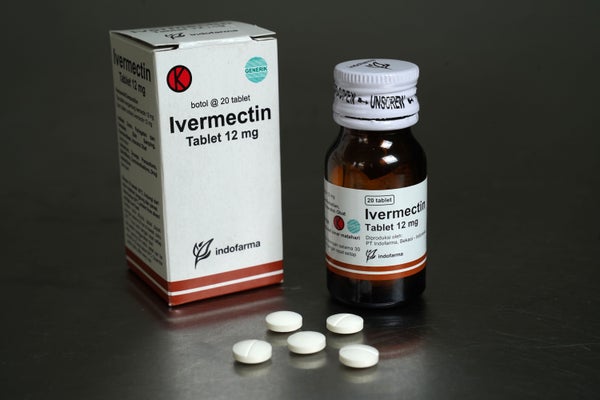
Ivermectin prescriptions skyrocketed in the six months after actor Mel Gibson claimed a version of the drug successfully treated three of his friends’ cancer on influencer Joe Rogan’s podcast, a new study found.
On a January 2025 episode of The Joe Rogan Experience, Gibson said that the antiparasitic drugs ivermectin and fenbendazole, which are both commonly used to treat worms in animals, had made his friends’ cancer disappear. Ivermectin, the development of which won two researchers part of the 2015 Nobel Prize in Physiology or Medicine, is well proven for its safety and effectiveness in treating diseases caused by parasitic worms in people. But there is no clinical trial evidence to suggest that either drug can treat cancer in humans, and fenbendazole isn’t approved for human use.
Animal studies suggest ivermectin and benzimidazole, a class of drugs that includes fenbendazole, may have certain properties that could inhibit tumor growth, but this use is unproven. In February the National Cancer Institute said it was investigating ivermectin’s ability to treat cancer, but the research is preclinical, meaning that whatever findings come of it still cannot be applied to patients without further studies.
On supporting science journalism
If you're enjoying this article, consider supporting our award-winning journalism by subscribing. By purchasing a subscription you are helping to ensure the future of impactful stories about the discoveries and ideas shaping our world today.
Nevertheless, after Gibson’s endorsement, prescription rates for ivermectin and benzimidazole doubled from January 2025 to July 2025 compared with the same period in 2024, the study found. Prescriptions specifically for patients with cancer also rose precipitously—rates were 2.5 times higher last July than they were in January 2025, compared with the same period in 2024. Male patients and white patients, as well as patients living in the U.S. South, were also more likely to be prescribed the drug, according to the research.
Importantly, the study can’t definitively say that Gibson and Rogan’s conversation caused the spike in ivermectin prescriptions, and it’s unclear whether the patients who received ivermectin chose to use it over other established cancer therapies, such as chemotherapy and radiation.
Still, the results underscore a growing chorus of concern from clinicians and researchers over ivermectin’s off-label use. Prescriptions of the drug also surged during the early days of the COVID pandemic, when it was touted as a potential treatment for the disease based on preliminary positive findings that turned out to be false. Now some experts fear the same could happen with cancer.
“Our findings extend prior work on the potential influence of celebrity endorsement on health care utilization,” the study authors write. “Such influence gains traction when institutional trust erodes. Protecting vulnerable populations from misinformation-driven deviations from evidence-based care requires coordinated action by clinicians, health systems, researchers, and policymakers.”