
IN BRIEF
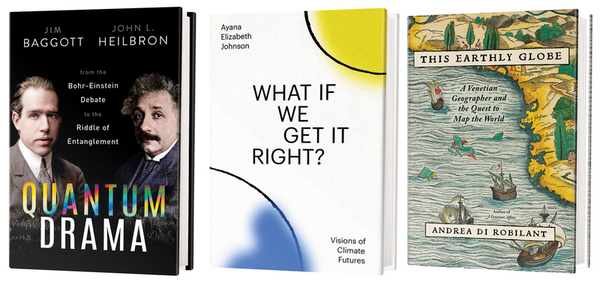
Quantum Drama: From the Bohr-Einstein Debate to the Riddle of Entanglement
by Jim Baggott and John L. Heilbron.
Oxford University Press, 2024 ($32.99)
This meticulous account of the tumultuous evolution of quantum physics spans more than a century, including Albert Einstein and Niels Bohr’s initial standoff at the fifth Solvay conference, in 1927, and recent work on the uncharted modern frontiers of quantum mechanics. Science writer Jim Baggott and professor of history John L. Heilbron balance depth and sophistication with sportscasterlike enthusiasm as they recount how the debate—wisely divided here into four acts—expanded to accommodate “the human passions and social contexts in which the ideas were conceived, debated, refined, accepted or rejected.” The stakes of these theoretical wins and losses are as profound as our understanding of the purpose of science itself. —Dana Dunham
On supporting science journalism
If you're enjoying this article, consider supporting our award-winning journalism by subscribing. By purchasing a subscription you are helping to ensure the future of impactful stories about the discoveries and ideas shaping our world today.
What If We Get It Right? Visions of Climate Futures
by Ayana Elizabeth Johnson.
One World, 2024 ($34)
“Peril and possibility coexist,” writes marine biologist (and Scientific American advisory board member) Ayana Elizabeth Johnson to explain this collection of essays and 20 interviews with climate visionaries. Despite an optimistic bent and eager embrace of solutions, including the founding of land trusts and investment in climate funds, these conversations are as much about “getting it right” as they are about what we are currently getting wrong. Johnson is a top-notch interviewer, and her guests are insightful and candid on topics ranging from community farming to environment-focused litigation. But written text often feels like the wrong format for these conversations—I would recommend the audiobook instead. —Maddie Bender
This Earthly Globe: A Venetian Geographer and the Quest to Map the World
by Andrea di Robilant.
Knopf, 2024 ($30)
Italian journalist Andrea di Robilant illuminates the geopolitical machinations and heart-pounding voyages of 17th-century explorers who would change how Europeans understood the shape of the world. Di Robilant animates the creation of a world map by recounting the swashbuckling adventures of Marco Polo, al-Hasan ibn Muhammad al-Wazzan, Father Francisco Álvares, and others. We glimpse the tireless work of Venice-based Giovambattista Ramusio, the humanist and editor who translated the explorers’ documents while navigating the “growing climate of intolerance” toward secular writing ushered in by the Counter-Reformation. Scrupulously researched, This Earthly Globe reveals the riveting foundations of modern geography and cartography. —Amy Brady