
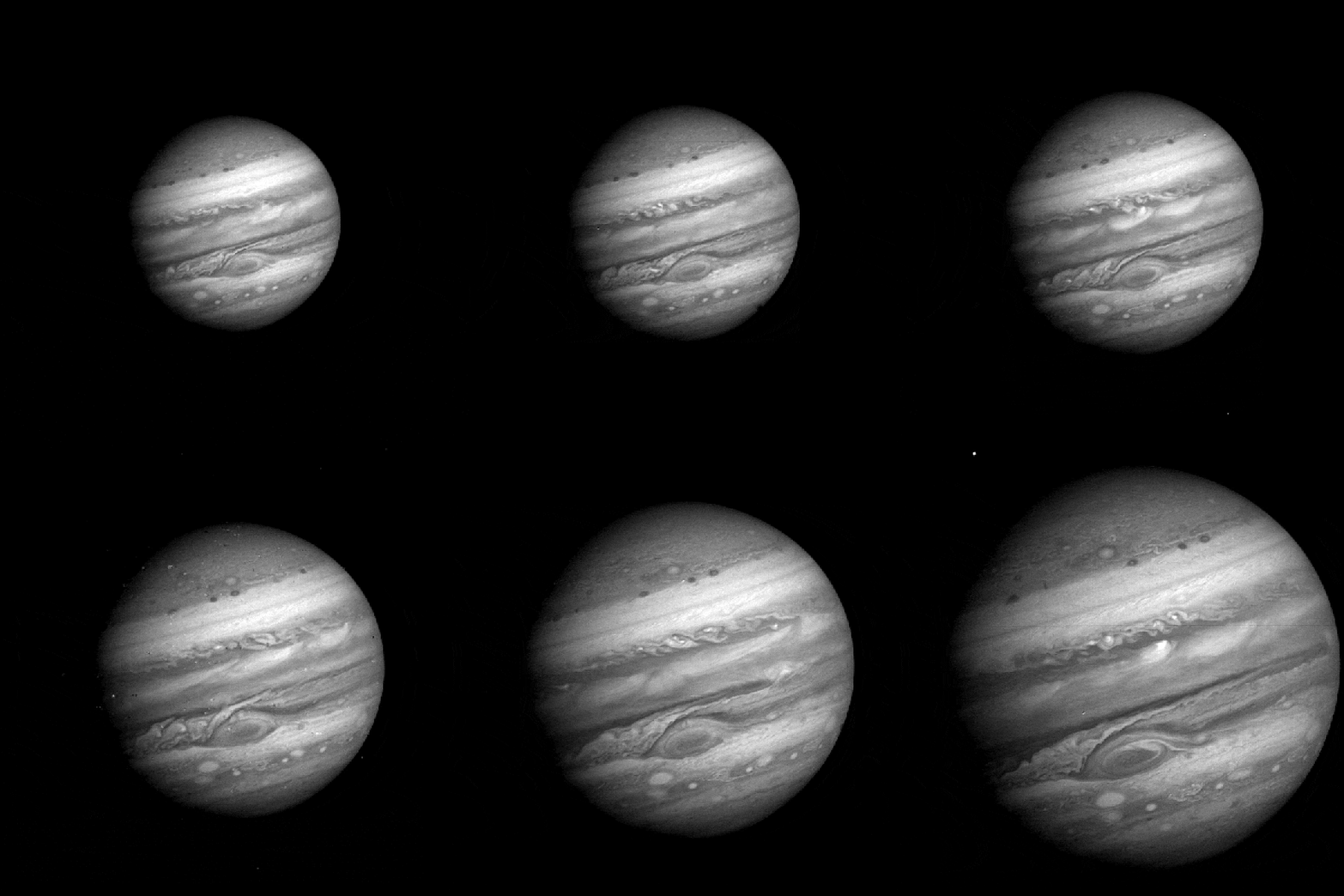
The solar system’s most giant planet is slightly less of a giant than scientists once thought. Jupiter, a world that is so huge that it could hold 1,000 Earths, is eight kilometers narrower in width at its equator and 24 kilometers flatter at its poles than had been previously estimated, according to a new study.
The new measurements overturn almost 50 years’ worth of consensus about the size and shape of the planet.
“Textbooks will need to be updated,” said Yohai Kaspi, a professor at the Weizmann Institute of Science in Rehovot, Israel, and senior author of the study, in a statement. “The size of Jupiter hasn’t changed, of course, but the way we measure it has.”
On supporting science journalism
If you're enjoying this article, consider supporting our award-winning journalism by subscribing. By purchasing a subscription you are helping to ensure the future of impactful stories about the discoveries and ideas shaping our world today.
Previously, scientists relied on observations by the Voyager and Pioneer spacecraft, which were launched by NASA in the 1970s. But NASA’s Juno mission, which launched in 2011 and reached Jupiter in 2016, has proved to be a game changer: By orbiting over Jupiter’s poles for the first time, it allowed for clearer observations of Jupiter’s size.
The research means scientists have to adjust their models of Jupiter, a change that will have resounding implications for both studying the planet’s features, such its volatile atmosphere, and understanding how gas giants like Jupiter formed in the first place.
“Jupiter was likely the first planet to form in the solar system,” Kaspi said in the same statement, “and by studying what’s happening inside it, we get closer to understanding how the solar system, and planets like ours, came to be.”