
Silicon is all around us: after oxygen, it is the most abundant element in Earth’s crust. So why living beings never incorporate it into their biochemistry has long been a puzzle.
Now chemical engineers have discovered that living organisms can be nudged to bind carbon and silicon together. They showed that a natural enzyme from a bacterium that lives in hot springs can form C–Si bonds inside living Escherichia coli cells—when the cells are fed the right silicon-containing compounds. And by engineering the enzyme, the researchers created a biological catalyst that performs the reaction more efficiently than any artificial one.
The finding could help chemists to develop new pharmaceuticals and industrial catalysts—and perhaps explain why evolution has almost completely shunned silicon.
On supporting science journalism
If you're enjoying this article, consider supporting our award-winning journalism by subscribing. By purchasing a subscription you are helping to ensure the future of impactful stories about the discoveries and ideas shaping our world today.
No room for silicon?
Nature exploits a number of common metals in biochemistry: notable cases include iron in red blood cells and magnesium in chlorophyll. But silicon (an element that has properties both of metals and non-metals) seems to occur only in bioinorganic compounds, such as those in the silica shells of the single-celled algae diatoms. It never makes its way into the carbon-based chains of organic life.
“Poor silicon, abundant in the Earth, but rejected by the biosphere for its wondrous evolutionary tinkering,” says Roald Hoffmann, a Nobel-prizewinning chemist at Cornell University in Ithaca, New York.
Researchers have learned to bind carbon and silicon together using artificial catalysts. But Frances Arnold, a chemical engineer at the California Institute of Technology in Pasadena, wanted to test whether some of life’s enzymes could do that too, given the opportunity.
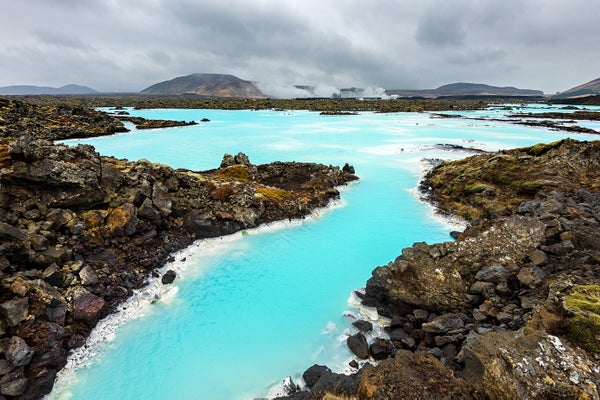
By scouring protein databases, she and her colleagues found a few dozen promising enzymes. After some screening, they settled on one from an extremophile bacterium that lives in Icelandic underwater hot springs, called Rhodothermus marinus. They synthesized the gene for this protein and inserted it into E. coli bacteria.
Their guess turned out to be correct: the enzyme could catalyse silicon–carbon bonding—if fed the right silicon-containing precursors. (The enzyme would not normally do this, because bacteria don’t naturally produce silicon-containing compounds). “It’s remarkable that nature is poised to do all sorts of wild things in the presence of this new manmade food,” Arnold says.
Efficiency boost
Still, the engineered E. coli were not very efficient at producing silicon-organic compounds. So the team introduced mutations into the active region of the enzyme and selected the bacteria that showed an improvement. A few generations were sufficient to enhance the yields—beating those of artificial catalysts. The results appear in Science on November 24.
“The Arnold group paper combines good chemistry and directed evolution to create enzymes that form carbon–silicon bonds in very specific ways,” Hoffmann says. “Beautiful work, creating new chemistry."
Arnold developed the directed-evolution technique in the 1990s and it is now used in countless applications, from improving laundry detergents to synthesizing medicinal drugs. She won this year’s €1-million (US$1.1-million) Millennium Technology Prize for that work.
“This opens up entirely new opportunities in pharmaceutical research and may lead to the discovery of new drugs,” says Yitzhak Apeloig, who specializes in organic chemistry at the Technion Israel Institute of Technology in Haifa.
The findings could also help to address basic questions about the early evolution of life, Arnold says, and in particular whether its disdain of silicon was happenstance or not. “We can start to explore what are the costs and benefits of incorporating silicon into life.”
This article is reproduced with permission and was first published on November 24, 2016.