
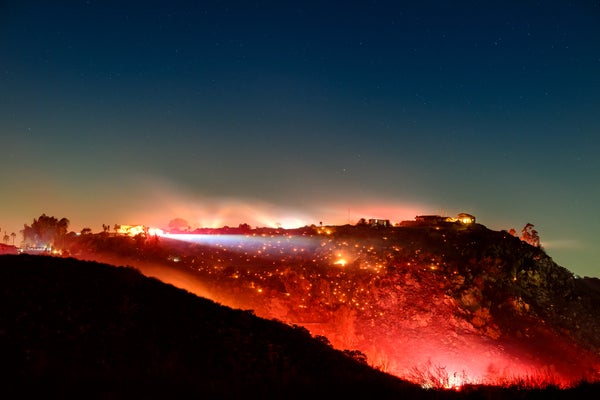
CLIMATEWIRE | SACRAMENTO, California — The Los Angeles fires are delaying California's rollout of new fire hazard maps that broadly detail more danger than previous versions, the state's fire marshal said Wednesday.
What happened
Cal Fire is already behind schedule in putting out new statewide recommendations for local agencies detailing which areas are at very high fire hazard, down to the parcel level. LA's wildfires will delay the agency further, State Fire Marshal Daniel Berlant told POLITICO in an interview.
On supporting science journalism
If you're enjoying this article, consider supporting our award-winning journalism by subscribing. By purchasing a subscription you are helping to ensure the future of impactful stories about the discoveries and ideas shaping our world today.
He said Cal Fire is now planning to release the new map recommendations for Northern California first, sometime in the next few weeks, and Southern California second, sometime in the months to follow, so as not to overwhelm local officials in LA, who are required by law to review and adopt the maps within three months.
Why this matters
The fire hazard severity zones in Cal Fire’s maps determine where the state government enforces certain wildfire prevention regulations, like fire-resistant building codes and fire risk disclosure requirements for home sales. The maps, which are supposed to be updated every five years by state law, were last updated in 2007.
While Cal Fire finalized its new fire hazard zones for areas under state firefighting jurisdiction in April 2024, including much of rural fire-prone California, it hasn’t yet released the new fire hazard zone recommendations for areas under local jurisdiction, including most urban areas.
Since Cal Fire last updated the zones in 2007, it has developed a new scientific model to reflect the risk of extreme wind-fueled wildfires, like the ones that tore through Pacific Palisades and Altadena.
The result: Even more areas, especially at the edges of current fire hazard zones, will be categorized as very high fire hazard in the coming update, Berlant said.
“There's going to be some tough conversations,” Berlant said. “There's going to be a lot more cities and even some counties that would get a fire hazard level that they don't currently have.”
What’s next
Once Cal Fire publishes the new maps, cities and counties must review the recommendations, make any changes and formally adopt the zones.
Gov. Gavin Newsom (D) and the Legislature were in talks late last year to reform and streamline the fire hazard maps, but those talks stalled amid opposition from environmental groups who feared the changes would put more people in the line of danger. State Sen. Scott Wiener (D), who authored the bill, SB 610, said earlier this month it was too soon to decide whether he would reintroduce the proposal this year.
Rachel Bluth contributed to this report.
Reprinted from E&E News with permission from POLITICO, LLC. Copyright 2025. E&E News provides essential news for energy and environment professionals.