
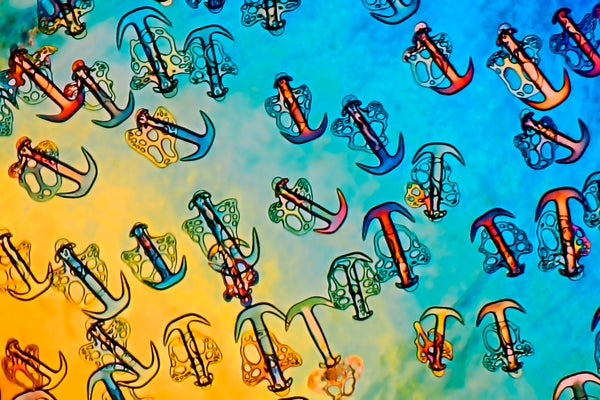
Hidden within the world we see are many others we cannot. Every year scientists, photographers and hobbyists capture enchanting stories that secretly unfold among seemingly mundane objects in the “microenvironment” for the annual Nikon Small World photomicrography competition.
Out of this year’s 2,000-plus photo entries from 88 countries, Nikon recently announced the top 20 winners, along with 10 honorable mentions and 58 images of distinction. Participants could submit photographs of anything from green algae to credit cards, as long as they were taken with some form of light microscope such as phase contrast, confocal or fluorescence. The judges based their picks on originality, aesthetics, technical skill and informational content.
The first place winner—which netted a $3,000 prize—is a photo of a fluorescently glowing human skin cell. Other winners give us an idea of what it might be like to shrink and perch atop a flower or capture what looks like an aerial view of roads: a neural network paved to support our racing thoughts.
On supporting science journalism
If you're enjoying this article, consider supporting our award-winning journalism by subscribing. By purchasing a subscription you are helping to ensure the future of impactful stories about the discoveries and ideas shaping our world today.
The following slide show features a selection of images that either won prizes or was given honorable mention in the contest.